AN UPDATE ON CROATIA’S ACCESSION TO EUROPEAN UNION
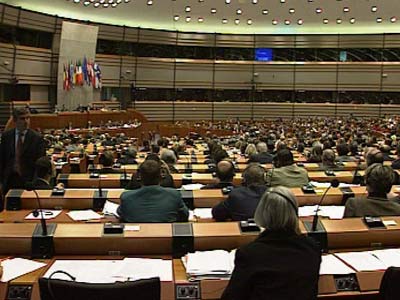
On Tuesday 10 April, the European Parliament grew by additional 12 members when observers from Croatian parliament joined the ranks of their European colleagues. Their official welcome is on the Agenda for the session in Strasbourg from 17-19 April, but regardless of this Croatian observers have already entered the Parliament.
In accordance with EU parliament protocol each received the key for their office.
The delegation, designated by the national parliament on 16 March, comprises seven members of the governing coalition and five members of the opposition. As observers, they will be allowed to debate and discuss, but not to vote.
Croatian observers will be Ingrid Antičević-Marinović, Biljana Borzan, Romana Jerković, Tonino Picula and Tanja Vrbat from the ruling SDP party, who will join the Socialists and Democrats group, Jozo Radoš from a junior partner in government – HNS – who will sit with Liberals and Democrats, opposition deputies Andrej Plenković, Davor Božinović and Frane Matušić from HDZ who will align with the group of the European People’s Party, as well as Nikola Vuljanić from the Labour party, Boro Grubišić from a regional far-right HDSSB party and representative of Serbian minority in Croatia Milorad Pupovac.
Croatian representatives should become full members of the European Parliament following the country’s accession to the EU in July 2013.
The process of EU member countries’ ratification of Croatia’s EU accession Treaty is still in progress. All 27 member countries must ratify Croatia’s EU Accession Treaty within their own parliaments.
So far Croatia’s treaty has been ratified by: Italy, Czech Republic, Hungary, Romania, Bulgaria, Latvia, Malta, Slovakia, Austria plans to ratify by summer, Lithuania – ratification already before parliament, Denmark has announced they’ll commence ratification in December.
The Netherland’s foreign minister Uri Rosenthal has recently said that their parliament is continuing in the wait and see mode, i.e. that they’ll continue to be strict and fair towards Croatia. The results of the EU monitoring of Croatia – which was placed as a condition for Croatia to become a member of EU – will be the guiding factor for Netherland’s parliament on the ratification of the Treaty. It’s expected that a number of EU countries will do the same, however, should Croatia continue in its positive path of compliance with EU standards there are no foreseeable difficulties with the ratifications being confirmed across the EU in time for 1 July 2013. Ina Vukic, Prof. (Zgb); B.A., M.A.Ps. (Syd)





 Croatia, the War, and the Future
Leave a comment