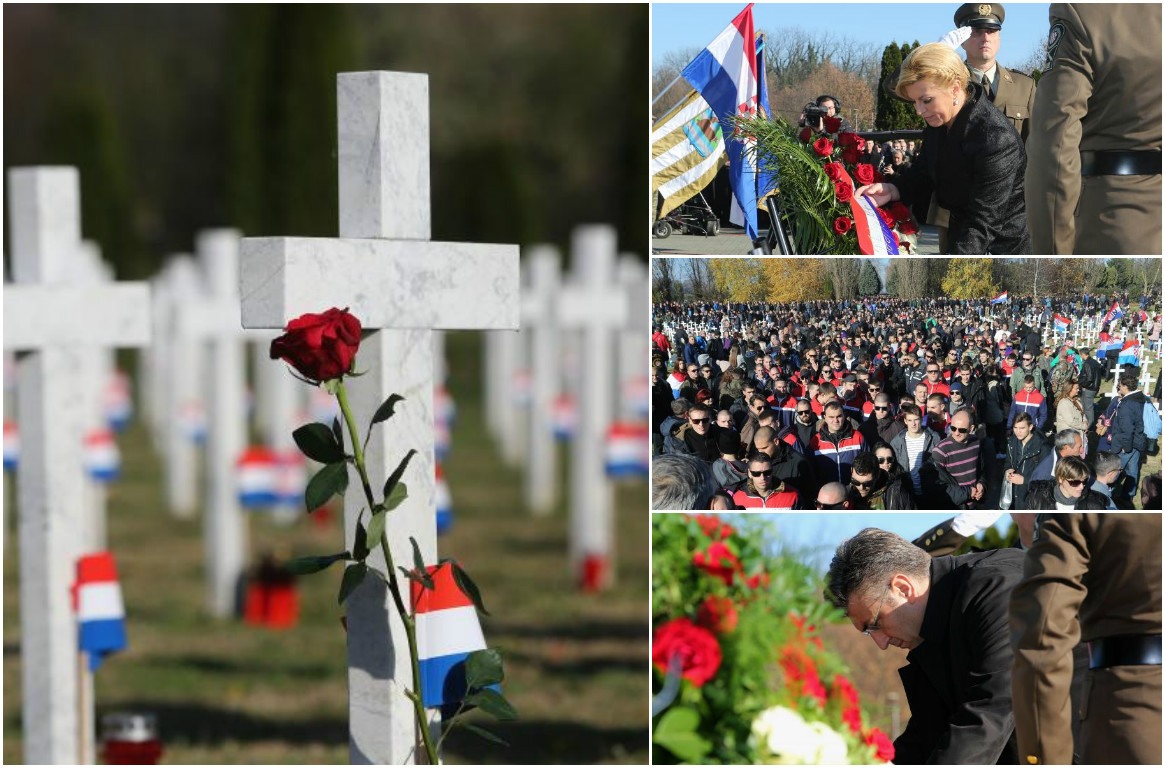
25 Years since Battle of Vukovar
Top R: President Kolinda Grabar-Kitarovic
Bottom R: Prime Minister Andrej Plenkovic
Photo collage: Vecernji List
Friday 18 November 2016 more than a 120,000 people took part in the memorial march in the eastern Croatian town of Vukovar marking the 25th anniversary of the fall of Vukovar to the Serb-led Yugoslav army and Serb rebel forces on 18 November 1991 after a three-month siege and slaughter of Croats and ethnic cleansing of Croats from the town. Across Croatia lit candles lined the streets to mark the day 25 years ago when rivers of innocent Croatian blood flowed under the knife of Serb aggressor and the destruction of Croatia reached the point of the senseless and brutal. More than 10,000 people were killed in the Croatian war (1991 – 1995) that started when Croatia declared independence from communist Yugoslavia, triggering a murderous rebellion by minority Serbs to whose aid swiftly came the communist Yugoslavia army seated in Belgrade Serbia.

18 November 2016
Photo: Screenshot Jutarnji List
The Battle of Vukovar began on 25 August 1991 when the Yugoslav Peoples’ Army (JNA) and Serb paramilitaries mounted an all-out attack on the town. About 1,800 Croatian defenders, including a large number of volunteers from throughout the country, defended the town for almost three months before being overrun by the besieging forces on 18 November 1991. About 4,000 people were killed in the battle.
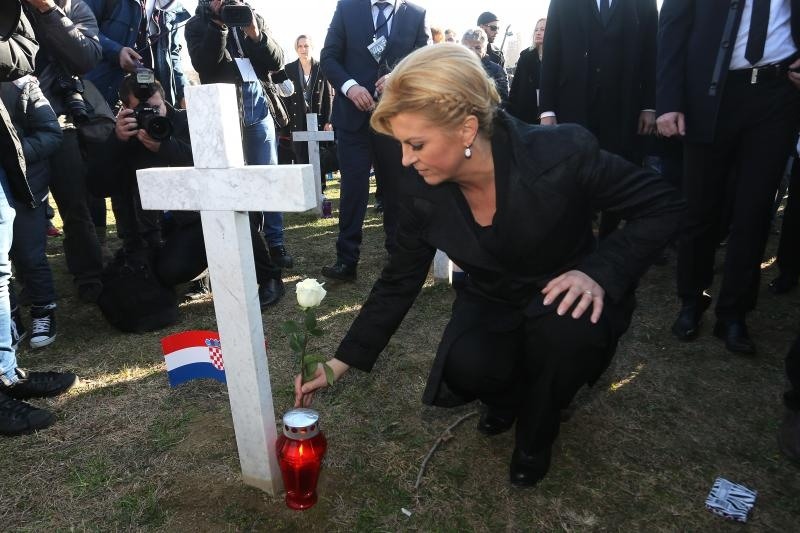
lights candles at Vukovar Memorial Cemetery
18 November 2016
Photo: Marko Mrkonjic/Pixsell
JNA troops took wounded Croatian soldiers and civilians from the town hospital to a nearby pig farm at Ovcara and executed them in the night between 20 and 21 November 1991. Two hundred bodies have been exhumed from the Ovcara mass grave and 76 persons are still unaccounted for. The youngest victim was 16 years old and the oldest was 84. Among the victims was a woman seven months pregnant.
After the town’s occupation, several thousand Croatian prisoners of war and civilians were taken to concentration camps in Serbia, and about 22,000 Croats and other non-Serbs were expelled from the town.
A total of 309 persons from the Vukovar area are still listed as missing.

Cardinal Josip Bozanic, Archbishop of Zagreb,
Kolinda Grabar-Kitarovic, President of Croatia
Ivan Penava, Mayor of Vukovar
at Vukovar 18 November 2016
Photo:Marko Mrkonjic/Pixsell
On the same day, November 18, 2016, several thousand people gathered in the coastal Skabrnja on Friday to commemorate the massacre on 18 November 1991 of 58 Croatian civilians and 26 soldiers by Serb rebel forces led by Ratko Mladic (currently at the Hague, ICTY, for war crimes committed in Bosnia and Herzegovina including Srebrenica genocide).

Skabrnja, Croatia
Photo: HINA/ ml
The next day, November 19th, thousands march peacefully in remembrance of massacres and tortures of Croats in Borovo Naselje (next to Vukovar) and Nadin (next to Skarbrnje) when of 19 November 1991 Serb paramilitary forces made up of Croatian Serbs with the help of Yugoslav army seated in Belgrade, Serbia, stormed into these villages and as in Vukovar and Skabrnje the day before – massacred dozens of Croatian civilians, forcing others in their thousands to concentration camps both in Croatia and in Serbia. The same terror occurred in many other places, day by day. It was the time of Serb occupation of Croatian lands by means of murder, ethnic cleansing, rape, destruction… a reign of terror no one can forget and most cannot forgive – the pain is still too fresh and the crimes still unpunished. This is not a good report card for Croatian governments since at least 1998 when the last patch of Croatian Serb-occupied land was reintegrated into Croatia. There are still hundreds upon hundreds of massacred and murdered Croats on the missing list and Serb simply will not reveal where their remains are buried.
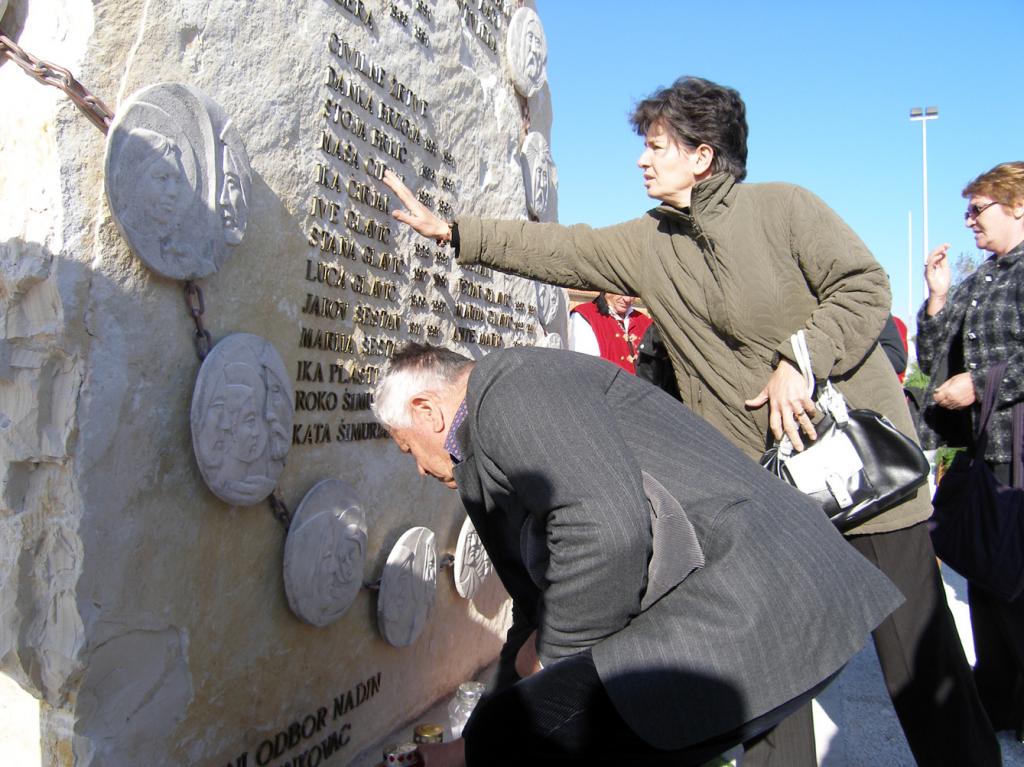
on 19 November 1991
Photo: Vladimir Brkic
Besides political rhetoric and declarations of condemnation Croatian governments have not really set a firm agenda intent on achieving the result of finding out where the remains of the missing people are and what had happened to them. This agenda should become the Croatian government’s demand to Serbia as part of Serbia’s negotiations to EU membership.
“I hope that after 25 years we will receive an answer to the question where our people perished, and then find the perpetrators and try them for their crimes and punish them,” said in Borovo Naselje to HRT TV news Ljiljana Alvir, president of the Union of the Families of the Imprisoned and the Missing.

Photo:hrt.hr
She said that when talking about Borovo Naselje, people from Borovo village (near Vukovar), the Serbs who were there (in 1991) and those who still live there, and who participated in the crimes and celebrated their “victory” on 19 November 1991, know where the graves of the missing are. She added that threats are made against Borovo population and the population of similar places, if they reveal where the graves are, that something (nasty) will happen to them. Besides, she said, they also fear that they’ll be indicted of the crimes if they reveal burial places and, therefore, keep quiet.
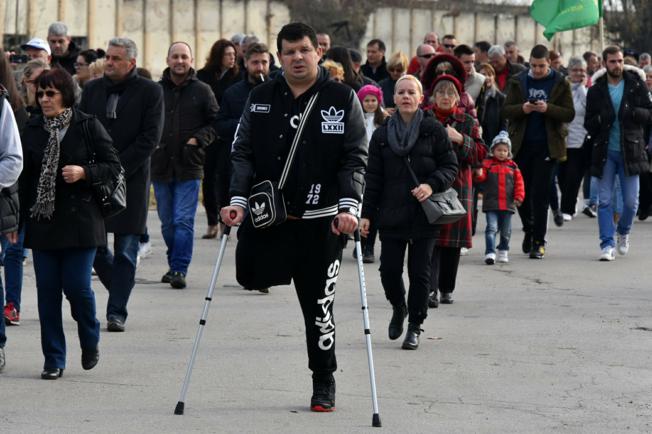
Borovo Naselje 19 November 2016
Photo:Gordan Panic
“We expect concrete measures from the Croatian government and pressure against Serbia, especially via the European parliament and to show Serbia that, if it doesn’t solve the question of the missing, it would not enter the EU as member state…” Alvir added.
Perhaps the new Croatian government will achieve more for the road to the revelation of the graves of the missing by appointing the retired General Ante Gotovina as Special Adviser to Defence Minister Damir Krsticevic at a government meeting in Vukovar on Thursday 17 November2016. General Gotovina along with general Mladen Markac were acquitted in 2012 by the ICTY of war crimes charges relating to the 1995 Operation Storm which liberated much of Croatian territory of Serb occupation.
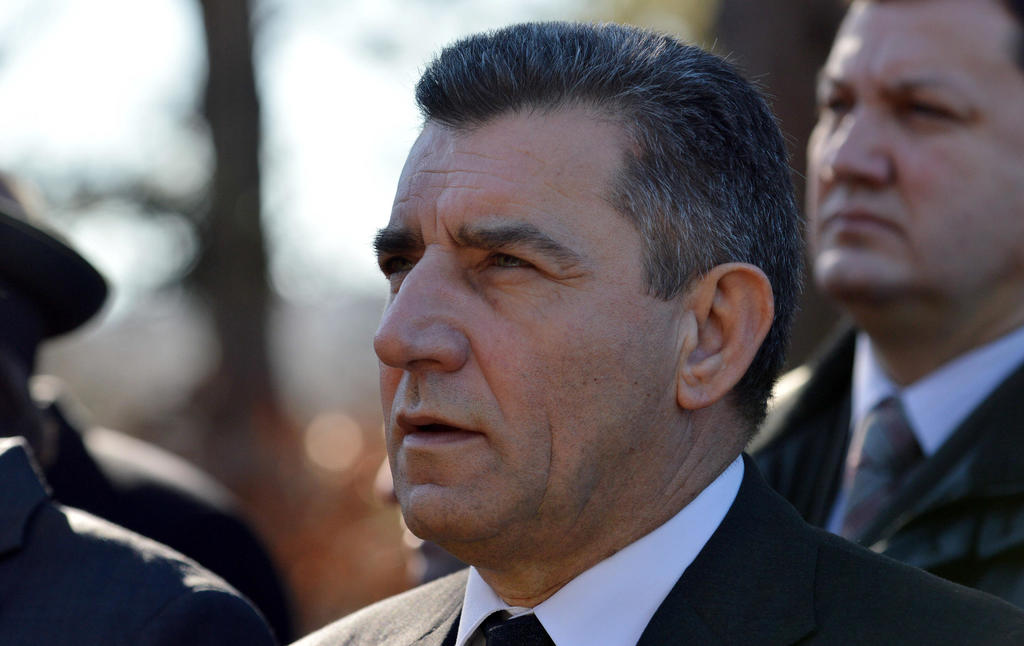
Photo: FaH/ Mario STRMOTIC /ds
“I am very pleased that my great friend and our hero has accepted my proposal and this engagement. I am confident that the general, with his knowledge and competence, will make a considerable contribution to national security and the development of the Croatian Armed Forces. It is my desire to continue encouraging the engagement of former professional soldiers and officers who helped in creating our Homeland and who can certainly also help in maintaining national security,” Krsticevic said in his Facebook post. https://eblnews.com/news/croatia/general-gotovina-appointed-special-adviser-defence-minister-44830 Serbs and Serbia are not going to be happy about this appointment as they continue with their denial of war crimes committed in Croatia but then nothing short of strong measures by Croatia will ever do justice to the victims of Serb-aggression crimes in Croatia.
And that pressure against Serbia should become the focus of all Croatian citizens in the coming months and years, if needed. Remembering those that perished without a trace, year after year, loses its true meaning without real efforts being made in finding their graves and their destiny. And so, I too hope that the Croatian government will turn its political rhetoric about the need to find the missing and start applying some real measures and pressures to actually give that revelation a real prospect. Ina Vukic, Prof. (Zgb); B.A., M.A.Ps. (Syd)




 Croatia, the War, and the Future
Leave a comment