

Several studies have been exploring efforts to help and rescue Jews across occupied Europe during World War II and I have been writing about that in my articles from time to time since 2011. The topic of rescuing Jews in the World War Two Independent State of Croatia/NDH is, however, a relatively new one and we have been as a nation very fortunate that Dr Esther Gitman had for the past two decades researched and addressed that topic very comprehensively.
During the past fortnight a new research-based overview Academic Paper of efforts in the rescue of Jews on the territory of Independent State of Croatia by Andrijana Perkovic Palosa and Marin Pelaic has been published under the title “Individual attempts to help Jews in Independent State of Croatia (NDH): petition letters by ordinary Croats” by Routlege (Taylor and Francis Group) within their realm of Holocaust Studies. This very engaging and compelling paper may be accessed via this link.
We discover in this paper that besides the Catholic Church representatives such as Archbishop of Zagreb, Blessed Alojzije Stepinac and a number of associations or civil groups even “Ordinary Croats often requested to exempt their Jewish spouses, friends, neighbors, colleagues, co-workers, and employers from wearing Jewish sign, to grant them ‘Aryan rights’ or to release them from concentration camps. In addition to that, distinguished people from cultural life of Croatia also pleaded for their Jewish colleagues to be released from camps due to their significant contribution to Croatian culture. (Esther) Gitman emphasized that during the first several months of the NDH (WWII Independent State of Croatia), these petitions and other efforts to save Jews ‘were daily occurrences.’ They were mostly addressed to the Ministry of Internal Affairs, the Ustasha Police, Great Prefects that led the administrative units in NDH called Great Parishes [not to be confused with territorial entities in Christian denominations], Eugen (Dido) Kvaternik – head of the Ustasha Police – and (Ante) Pavelić himself…”
After the authors of this Academic Paper had reportedly examined the petitions devised to save Jews more thoroughly, they gradually noticed some patterns in their content, that is in the argumentation their senders used to persuade the authorities to exempt some Jews from wearing Jewish sign, to grant them ‘Aryan rights’ or to release them from camps. Hence, the authors categorized the documents in accordance with the arguments they contained. As the authors embarked upon categorisation of petitions, they write that they realised that most of the arguments emphasised human and professional qualities of those Jews on whose behalf the petitions had been written, which were in severe contrast to the antisemitic propaganda from two Zagreb’s most influential newspapers – Novi list and Hrvatski narod, that followed the propaganda template of Nazi occupation of Croatia.
With the wealth of material and documents the authors examined that are listed in the Notes and References section of their Paper, it is praiseworthy to see that an array of the documents was provided for their research by Dr Esther Gitman and that contribution is therein acknowledged.
The authors created six categories of petitions according to the arguments the petitioners and signatories used. Each of the arguments from the petitions directly stands in opposition to one or more of the antisemitic propaganda statements, as can be seen on the following Screenshot of Table 1 in the Academic Paper. The categories of petitions to save Jews by ordinary citizens identified are listed as follows, and each is comprehensively explained in the Paper and provides clear and detailed insight into the efforts to save Jews:
- Category 1: Jews who contributed to Croatian economy.
- Category 2: Jews who were good employers to Croatian girls and women who worked in their households.
- Category 3: Jews who provided financial help to Croats/Jews who were in financial difficulties.
- Category 4: Jews who were Croatian patriots.
- Category 5: Jews who contributed to the Croatian culture.
- Category 6: miscellaneous category (The last ‘miscellaneous’ category refers to those petitions containing a new argument or two or more above arguments that stand in opposition to several or all antisemitic propaganda statements).

Reading this Academic Paper will add significantly to the historical knowledge about saving and rescuing Jews in World War Two Independent Croatia, which is an equally important topic as the tragic end thousands of Jews met during the times of sweeping exterminations based on racial laws. Ina Vukic
About the authors; sourced Taylor and Francis Online:
 Andrijana Perković Paloš (Split, 1988) (Photo credit: Slobodna Dalmacija) earned her doctoral degree in Interdisciplinary Humanities (field History) at the Faculty of Humanities and Social Sciences University of Split, where she is a research fellow and adjunct senior instructor. She participated at two Horizon 2020 projects on research integrity. Her field of interest is controversial and sensitive topics from contemporary history as well as topics concerning relations of Croats and Jews. She is the author of Government of Democratic Unity (2020) and several research articles and chapters in books.
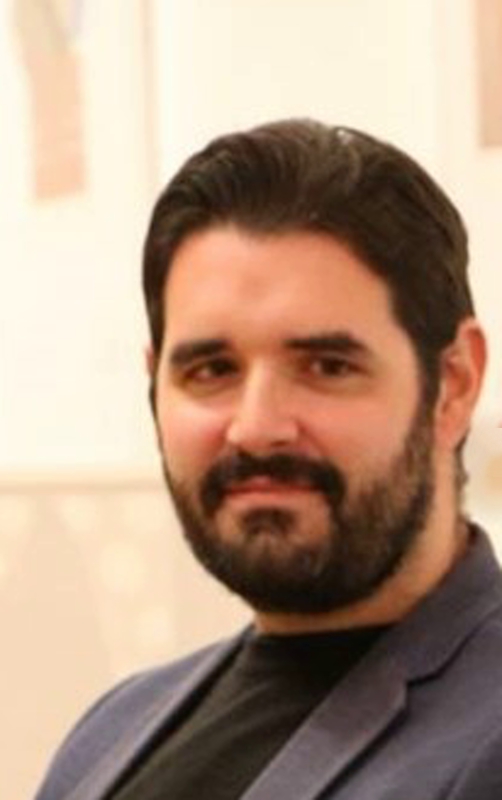 Marin Pelaić (Split, 1987) (Photo credit: Screenshot University of Split) earned his M.A. degree in History at the Faculty of Humanities and Social Sciences, University of Split having defended the thesis Imperial Policy of Fascist Italy on the occupied territories of today’s Croatia and Slovenia (1941–1943). He participated in an international scientific meeting held in Split in 2015 (the topic covered was Foreign Policy of Republic of Croatia during 1995). As a student, he also participated in numerous history students’ conferences (in Croatia, Slovenia, and Hungary).




 Croatia, the War, and the Future
Leave a comment