
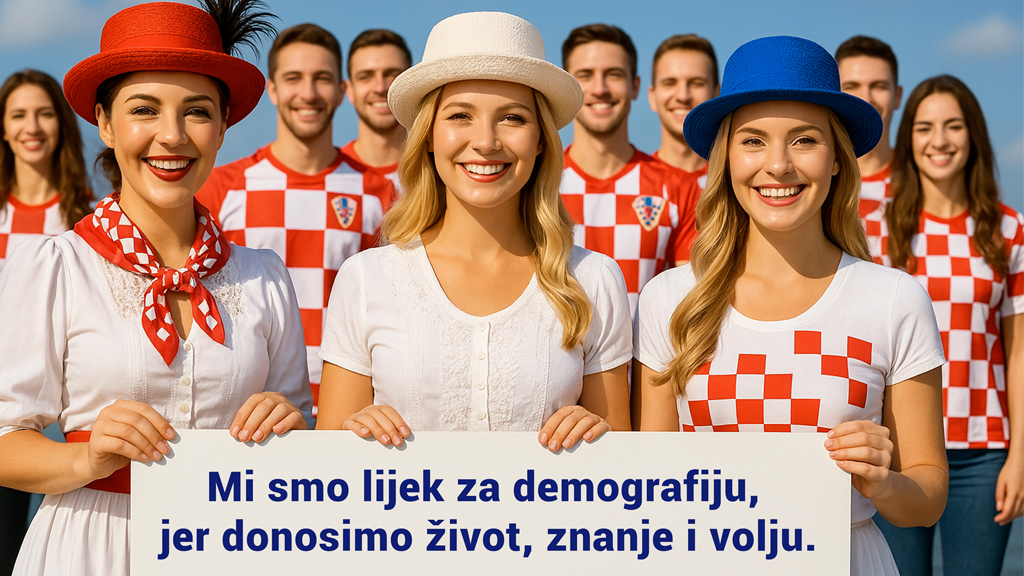
According to the Croatian media during the past couple of months the government in Croatia is planning a new step towards immigrants and returnees from the diaspora who do not hold the Croatian citizenship. The Act, law on Relations with Croats Outside Croatia is reportedly being amended, which will reportedly allow them to regulate their stay in Croatia under more favourable conditions.
Official relations of Croatia with its diaspora under the said Act of parliament has for over a decade been marked by the establishment and operation of the Central State Office for Croats outside the Republic of Croatia, headed by the State Secretary Zvonko Milas. To the view of many this Office has become a political arm of the ruling HDZ/Croatian Democratic Union Party, albeit much ineffective in harnessing, in any significant degree, the diaspora for a move to live in Croatia. Its most pronounced activities have been government grants application and decision process whereby organisations, clubs, program initiatives … operating within Croatian diaspora may receive financial assistance of community grants backed by the Croatian government. In that process they engage in motivating Croats living abroad to return to Croatia. But its biased approach to applications and groupings within the diaspora appear to be discouraging many from cementing stronger ties with the homeland, or returning to it.
Careful analysis of grant recipients over the years indicates to politically coloured decisions as no organisation or association critical of the sorry state of democracy in Croatia, critical of ongoing communist Yugoslavia mentality, have received a cent of such funds. If one considers that today’s Croatia exists as an independent country because its masses fought against communist Yugoslavia then it is those organisations that should deserve a positive consideration in the dishing out of government grants more than any other. They say Rome was not built in one day, neither will full democracy in Croatia. The battles continue.
Furthermore, applications appear to be filtered via Croatia’s politically-charged diplomatic staff in overseas diplomatic missions before any are sent to this State Central Office for decision making on who or which association or program gets a grant and how much. To make matters more conducive to political manipulation of what should otherwise be a democratic process open to everyone from start to finish, the so-called advisers from the diaspora sitting on this State’s Central Office committee must in accordance with the said Act be members of a Croatian Association or Club or Organisation based in the diaspora. Individuals with appropriate merit who are not members of any “club” cannot be nominated for such a role! Hence, another avenue of political manipulation. It seems that the Croatian government, or its relevant bodies, do not recognise the fact that people living in a democracy have an absolute right to decide whether they wish to join a “club” or an “association” or nor, and yet still possess the appropriate merit to be considered to be members of this government Advisory body.
Given that the Croatian Government now has a relatively new department or ministry, viz the Ministry of Demography and Immigration, which did not exist before, it would be logical and proper that the State Central Office for Croats outside the Republic of Croatia be extinguished. Or at least, its activities related to the return of Croats to Croatia fully transferred to the new Ministry (to operate as it sees fit and as per community needs) and its portfolio redefined. Otherwise, business is likely to run as usual and that always disappoints multitudes in terms of productivity and democratic processes.
Apparently, the rehashing of the above said Act will address the issuance of a “residency Certificate” which will now come under the jurisdiction of the Ministry of Demography and Immigration, which certificates will reportedly be issued for a period of up to two years. Under such arrangements immigrants and returnees without Croatian citizenship will be able to regulate their stay, get a job, learn the Croatian language and resolve their citizenship issues. It is expected that the Croatian Parliament will be placing the proposals for changes to this Act in the near future.
Some five years ago Croatia had taken some legislative steps that were supposed to make it easier for people who do not have Croatian citizenship but have Croatian origin and want to come to Croatia to obtain Croatian citizenship. Things have not proven easy as unacceptable delays and red tape still make it difficult to obtain Croatian citizenship. Nevertheless, applications for Croatian citizenship have increased since then and the leaders in this trend appear to be people of Croatian origins living in South American countries. There are about 3.5 million people of Croatian origins living outside of Croatia and about one million of them possess Croatian citizenship. In light of the population size of Croatia itself, about 3.8 million, the numbers in the diaspora are significant.
Channelling all necessary processes to increase the return of Croats to Croatia is best undertaken under one government department. This reduces confusion, increases effectiveness and reduces detrimental manipulations that can occur. The way things stand now is that messages and activities regarding immigration and return of Croats are oozing out of two separate government bodies, i.e., the Central State Office for Croats outside of Croatia as well as from the relatively newly established Ministry for Demography and Immigration. At times it appears like a competition for political gain and a nest that generates confusion, erodes the relationship between Croatia and its diaspora and perpetuates administrative nightmares for a person of Croatian origins intending to return to Croatia to live.
Soon after its establishment in 2024 the Ministry for Demography and Immigration in Croatia has sealed a new model through which it evidently plans to attract more Croats to return to Croatia. By appointing Mr Zdenko Striga, head of the Marshall Plan for Croatia – Future with the Diaspora Organisation, as one of its advisers, steps towards achieving solid results in this field are becoming clearer and clearer. It would seem that the “hands on” approach by that Marshall Plan Organisation in assisting individuals of Croatian origins living abroad and families with their path of return or immigrating into Croatia is the essential ingredient of positive results. In that environment, it is evident that the State Central Office for Croats outside of Croatia, with its current activities that often shape into doubling-up or confusing atmosphere, is superfluous and damaging.
To quote Mr Zdenko Striga, from Marshall Plan Croatia organisation: “returning is not just filling out forms.
Returning is an emotion, a courage, a decision of the heart.
It is meeting people who understand your dreams and lend you a hand when you need it most.
Behind every document, behind every signature, there are silent angels – dedicated experts, workers and people with big hearts who, with their knowledge, patience and will, help returnees find their home again every day.
Because Croatia is not just a country. Croatia is a sense of belonging.” Contact : marshallplan.dijaspora.hr@gmail.com
Ina Vukic





 Croatia, the War, and the Future
Leave a comment