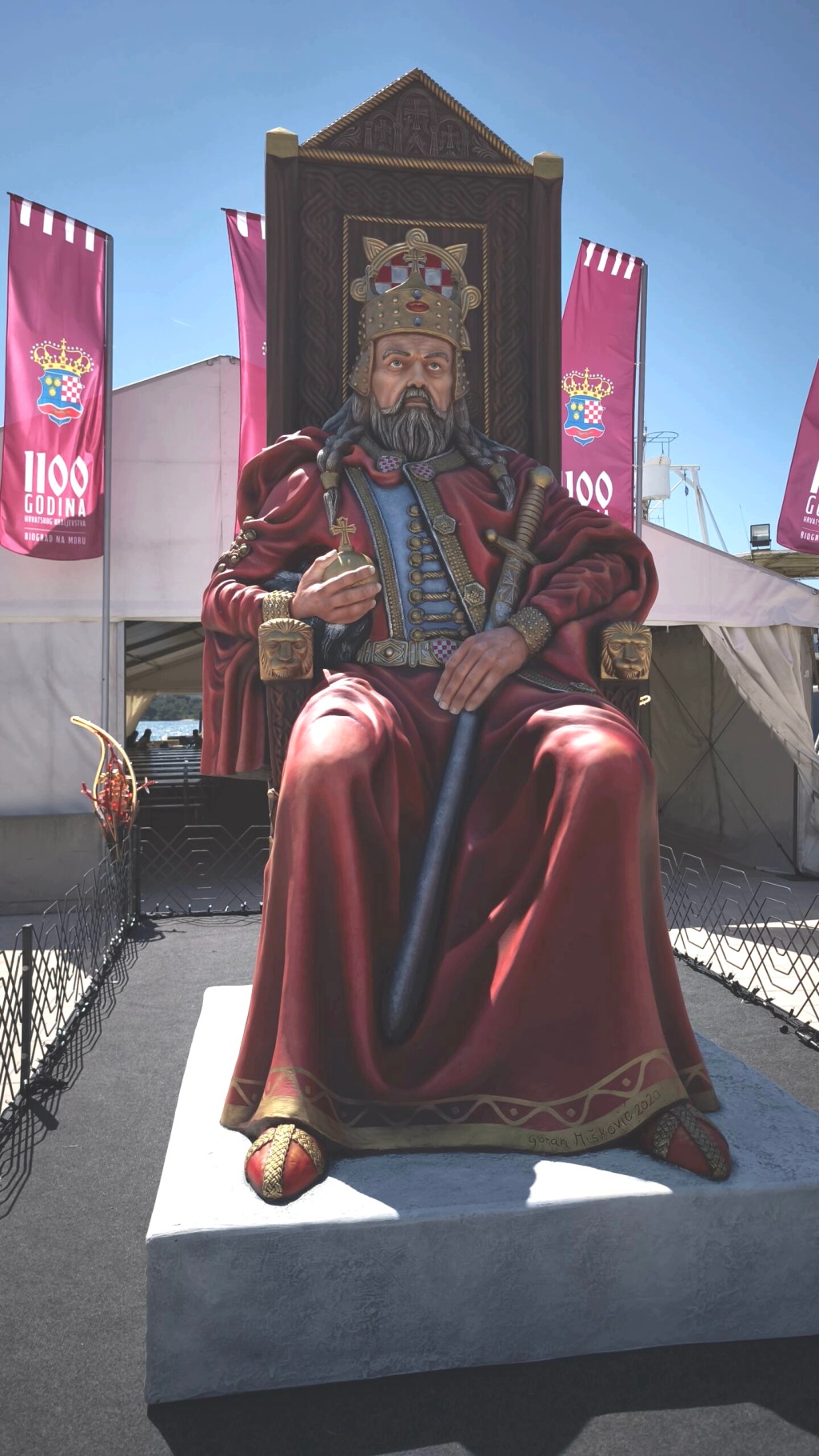
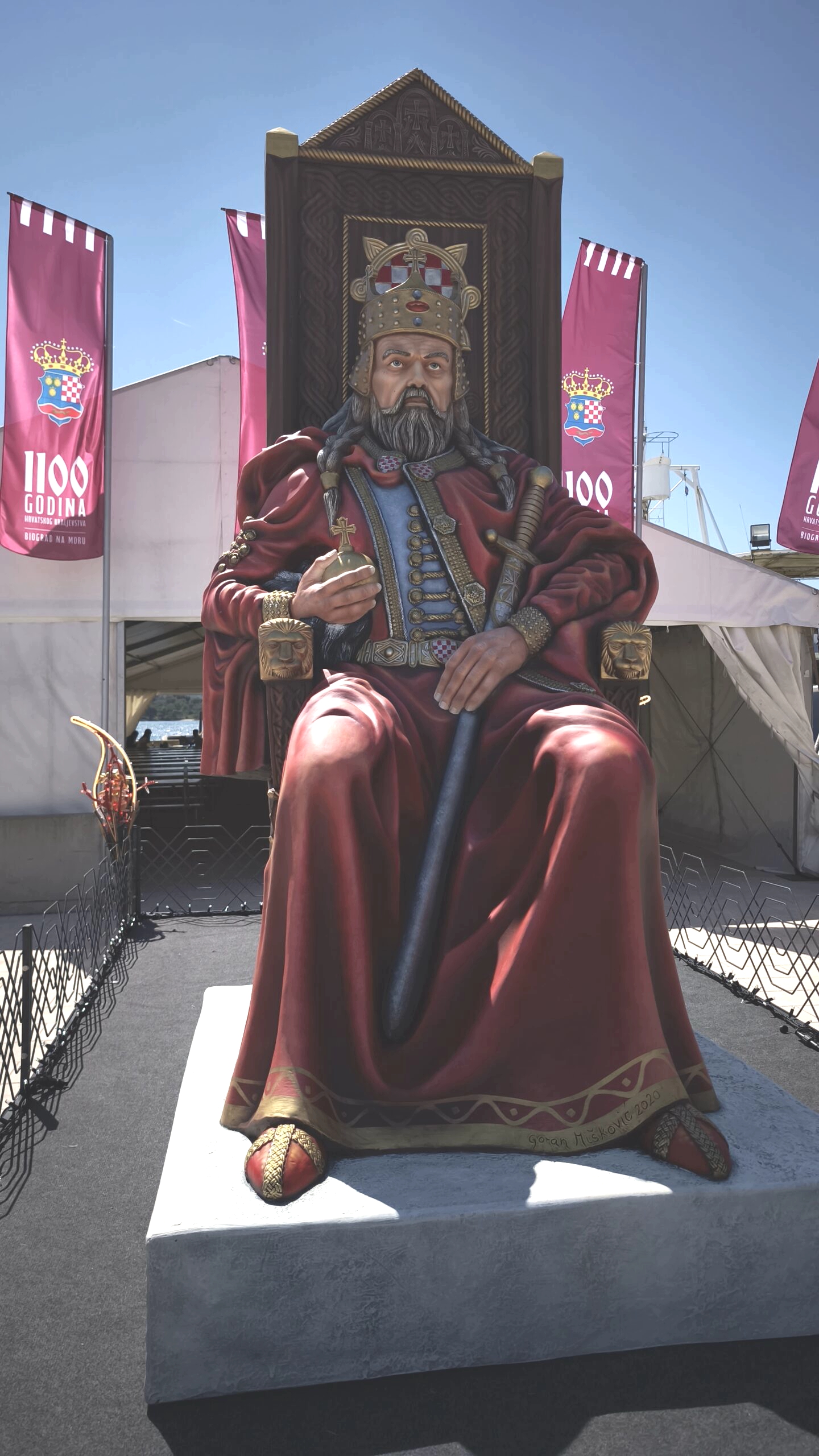
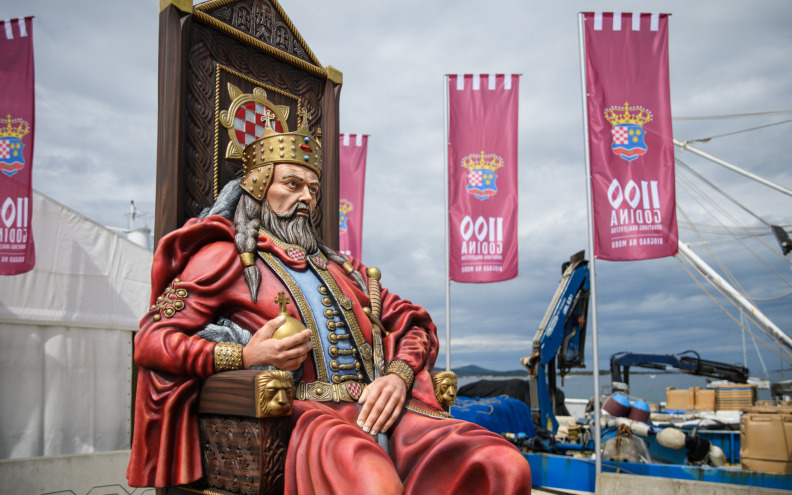
2025 is the year when Croatia marks the 1100th Anniversary since the crowning of its first king, King Tomislav. The coastal town of Biograd na Moru (Biograd at the Sea) that once was a royal city (Biograd na Moru is a Croatian royal city that was first mentioned in the mid-10th century, while in the 11th century it was the seat of Croatian kings and bishops) and one of the most important historical centres of Croatia saw this month the unveiling of a monument to King Tomislav. One may say this is nothing unusual because many other monuments to and statues of King Tomislav exist across Croatia but in fact this one is special and wonderfully surprising. It is in full and lively colours just like statues of saints and Holy family one finds in Croatian Catholic churches or porcelain dolls for children to play with or collectors to keep in glass cabinets. Even further, the monument may in one’s imagination come alive as some AI creation of the modern digital and electronic world. To me it is beautiful and strong, even though some of the Croatian media reports that some found it in bad taste! But, after all, all art works attract opposing views regardless of the mighty symbolism they represent.
Biograd na Moru thus became, between 8 and 11 May 2025, the centre of one of the most solemn and significant events in recent Croatian history – reviving the spirit of the times of one of the greatest 10th century Kingdoms in Europe in a magnificent way. The event began on Thursday, 8 May, with the screening of the documentary film “King Tomislav” by Drazen Klaric, produced by Vecernji list newspaper, which took viewers back to the time of the founding of the Croatian state, but also with the unveiling of a monument to King Tomislav on the main pier. The statue of King Tomislav will, according to media, be moved in front of the city administration building at the main town square. Schools teach that Tomislav was crowned in 925 on the Duvno Field in today’s Bosnia and Herzegovina, that he had a magnificent army with which he successfully defended Croatia from the Bulgarians and Hungarians, and laid the foundations of Croatian statehood.
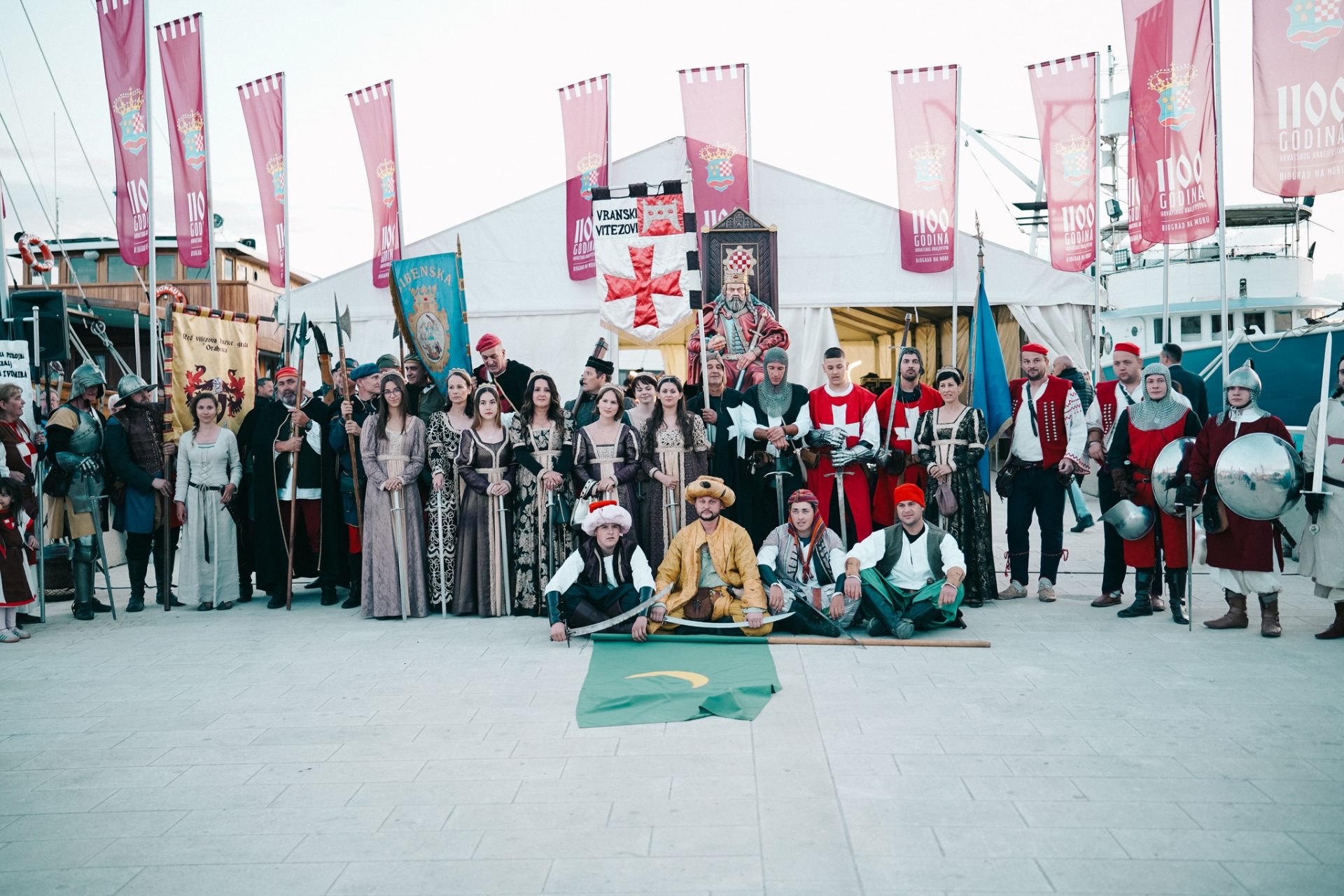
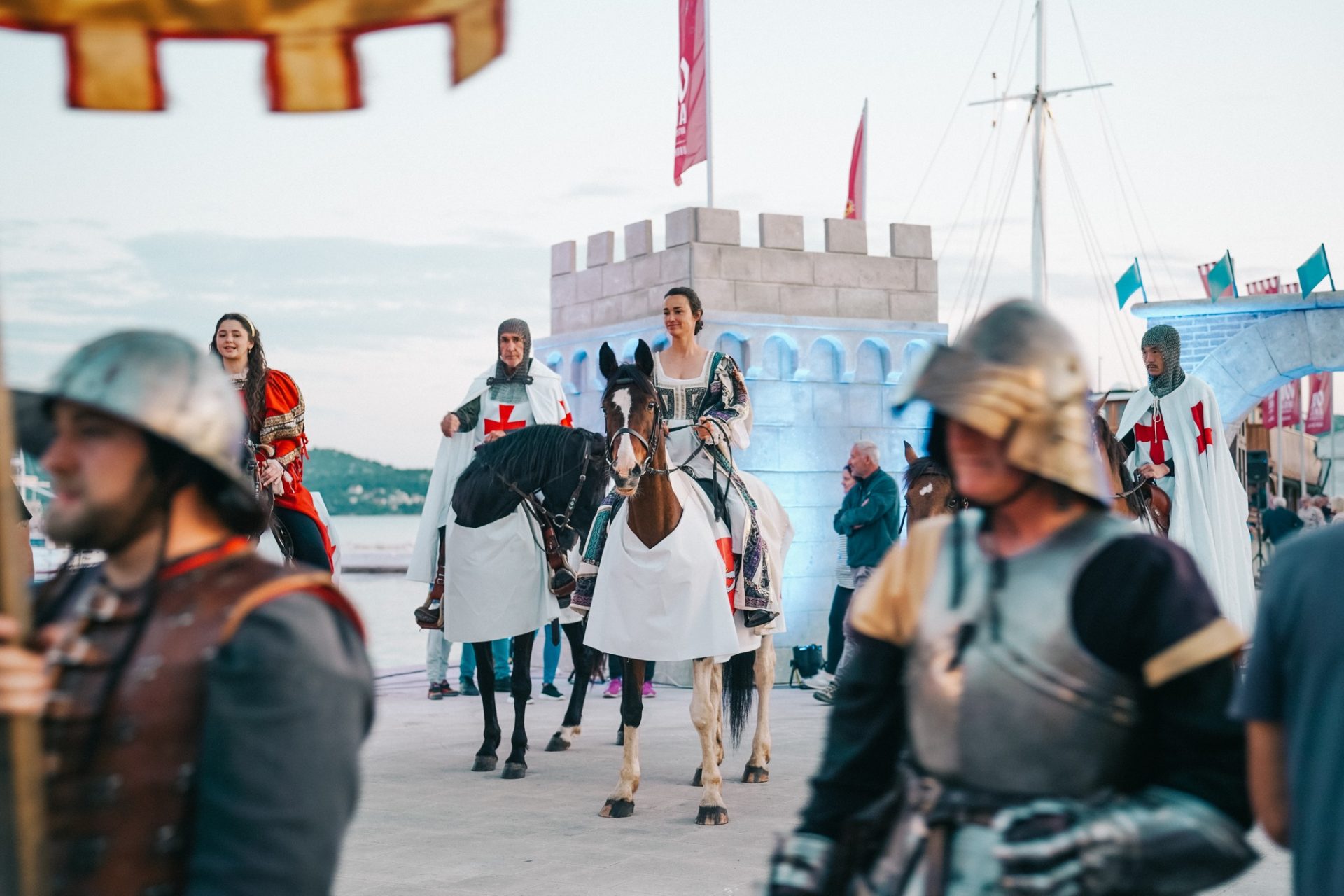
The colourful monument, made of epoxy resin, was unveiled by Drazenko Samardzic and Marijan Stopfer, and blessed by Don Jure Zubovic, priest of the parish of St. John the Baptist in Torovi. The anthem was performed by the newly established customs klapa Sv. Matej, while Drazenko Samardžic and journalist Tihomir Dujmović addressed the occasion. On Friday, May 9, Biograd turned into a large stage of tradition and art – hosting a fair of Croatian handicrafts, the opening of an exhibition of Croatian fine arts, presentations of traditional Croatian gastronomy, a ceremonial parade of cultural and artistic societies, with concerts by the ethno group Čuvarice and the band Hrvatska ruža. Saturday, May 10, brought the culmination of the events – a morning vigil of the Biograd City Music, a ceremonial parade of traditional Croatian boats and horses, majorettes and musical groups. Sunday, May 11, was marked by spirituality and togetherness. The day began with a vigil, continued with an exhibition of the Croatian art colony and a solemn mass in the church of St. Anastasia, and after the mass, the socializing continued in the churchyard with a reception and traditional music.

During the same week the city of Split also held an event, a conference, in honour of the 1100th Anniversary of the crowning of King Tomislav in 925. The ceremonial opening of the conference “The Beginnings of the Kingdom: Split Church Councils, Tomislav and His Era on the 1100th Anniversary”, on May 8, 2025, on the main altar of the Cathedral of St. Domnius, in Split Croatia, a precious object that has been whispered about in the silence of archives for decades shone under glass. Symbolically, it was important because it was a rare opportunity for the public to view the oldest preserved book in Croatian. The Split Gospel Book, also known by its Latin name Evangeliarium Spalatense.
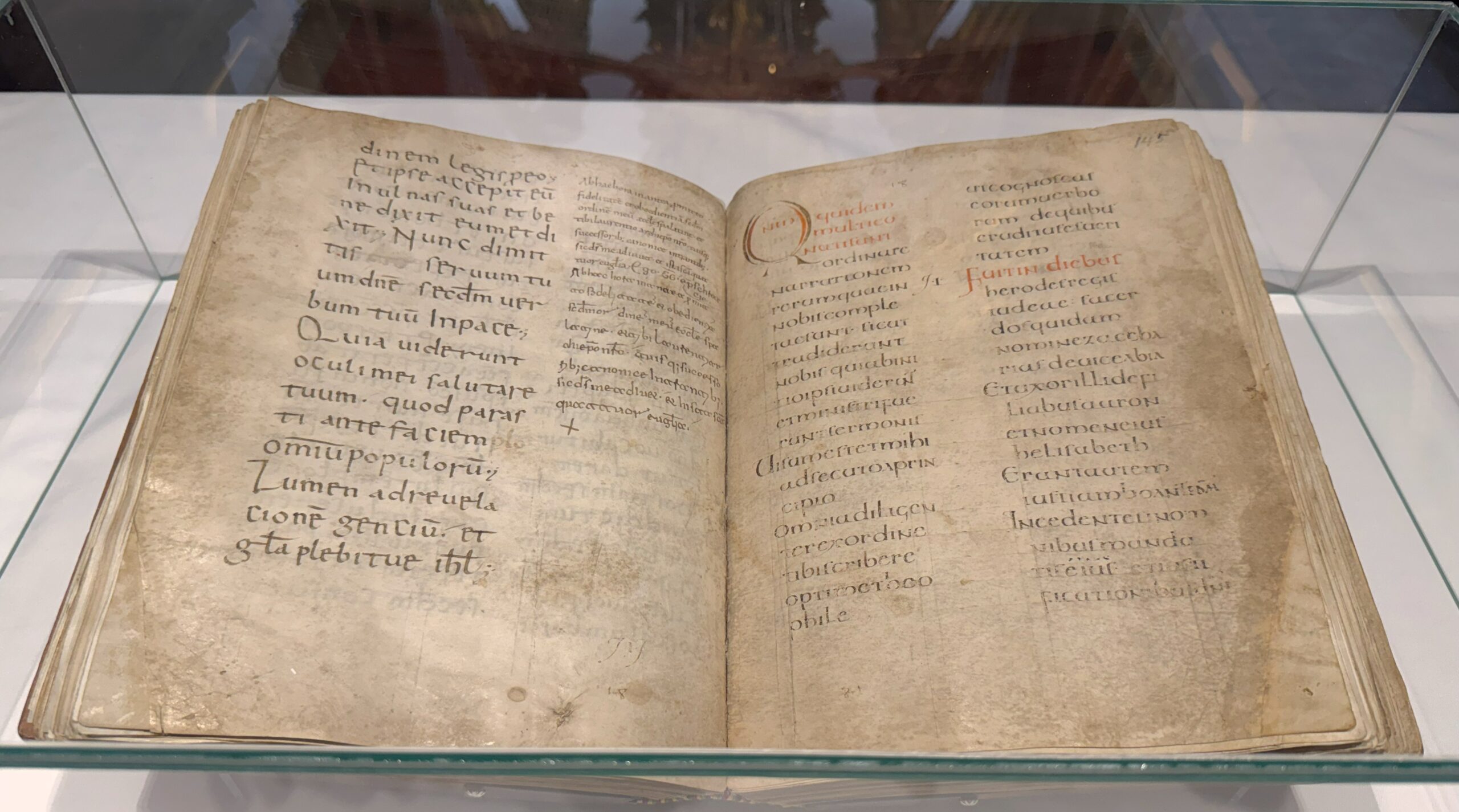
It is a manuscript containing the text of the four Gospels with instructions on when to read what during the services throughout the year. It is so old that it was almost certainly in circulation during the time of King Tomislav and the church councils in Split.
Due to its importance and location in the Split cathedral, it is not difficult to imagine that Tomislav himself took an oath on this book. Especially if one considers his presence at the Split councils and his cooperation with Pope John X, confirmed by authentic papal letters. The Split Gospels, by all accounts, were the subject of sanctity and a royal oath.
The Gospels are otherwise liturgical books of the Western Christian tradition. This Split Gospel is written in Latin and is still kept in the treasury of the Split Archdiocese.
Over the centuries, it has also been referred to as the Book of St. Domnius – a relic that, according to medieval legend, was written by the patron saint of the city of Split himself. This codex has outgrown its liturgical framework in narratives and historical writings. It became a symbol of continuity, holiness, and oath.
The conference heard new findings about the Croatian Kingdom and the time of Tomislav, as well as the wider European context. Croatia, it revealed, was firmly tied to the Roman Catholic Church even before Tomislav, and some scholars have put forward the thesis that Croatia existed as a kingdom even before his coronation.
During one of the breaks, Rosamond McKitterick, a distinguished historian from Cambridge who studies medieval Europe, was asked about the Split Gospels. In her presentation, she emphasised that the papal policy of the 10th century must be re-examined, without ideological filters. “The time of Pope John X was crucial for the consolidation of the church in Croatia,” McKitterick said.
The impression that arises is that the popes saw Croatia as an equal even 1,100 years ago. It’s just that this history is not kept here, but in the Vatican and Carolingian archives.
McKitterick also drew an interesting parallel with England – between the Split Gospels and the Codex of St. Augustine, to which bishops and even kings swear. She added that the Split Gospels probably arrived from Ravenna, in the 8th century.
The Croatian royal cities, in addition to Biograd na Moru, are Šibenik, Knin, Skradin, Nin, Klis, Bijaci and Omis. According to some sources, Drzislav Trpimirovic (son of King Mihailo Kresimir II and Queen Jelena, whom we know from Solin) was crowned in Biograd. And in May 2025 Biograd na Moru put on a magnificent display of Croatia’s historical beauty while the city of Split revealed that an object (book) that was used for oaths as an essential element of church and state relations has been kept in Split for all these years has aroused curiosity and hope that more of the suppressed Croatian historical truths will be revealed in the coming years. Ina Vukic



 Croatia, the War, and the Future
Leave a comment