The fall of totalitarian communist regimes in 1989 and early 1990’s in central and eastern Europe has not been followed, as multitudes around the world expected, by an international significant and all-encompassing investigation of the crimes committed by them. Moreover, the authors of these crimes have not been brought to trial by the international community, as was the case with the crimes committed by National Socialism (Nazism) and its allies such as Croatia’s Ustashe were, propelled into such alliance in circumstances of German occupation and communist threat to revive Yugoslavia, of which Croatia fighting for its own independence wanted no part.
After president Franjo Tudjman’s death in December 1999 Croatian public and governing space has seen an intolerable level of former communists and communist Yugoslavia apologetics take the reins of political power positions and increasingly suffocating the values of the 1990’s Homeland War with the rise of celebrations that lift communist Yugoslavia totalitarian regime to undeserved high levels. After all, almost 94% of Croatian voters voted in 1991 to exit from communist Yugoslavia and, consequently, lost rivers of blood in the war for independence. Hence, all attempts in praising communist Yugoslavia and its cruel totalitarian regime digs a deeper wound and prevents its existing crust in the nation to fully heal. As a result, today, in Croatia, we see more politicians and government officials being present at all commemorations for victims and alleged victims of World War Two Ustashi regime and only sometimes at commemorations for victims and alleged victims of communist partisans who baptised themselves later s anti-fascists . The fact that the latter, besides being victims of crimes as the former, outnumber the former by hundreds of thousands makes no difference, it seems.
In its resolution of 2 April 2009 on European conscience and totalitarianism the European Parliament condemned totalitarian crimes and called for the recognition of “Nazism, Stalinism and fascist and Communist regimes as a common legacy” and for “an honest and thorough debate on their crimes in the past century.” The resolution also called for several measures to strengthen public awareness of totalitarian crimes. The resolution, therefore, dismisses the pretence of moral superiority of those who fought fascism most likely because they engaged in mass murders and most likely than not, more horrid and numerous than fascists did. This evidently did not suit the Croatian official leadership and instead of condemning communist Yugoslavia crimes, insignia, acts, symbols, chants, salutes … as it did with the World War Two Ustasha regime ones, it encouraged communist apologetics to more public displays of celebrating communism and its murderous leader Josip Broz Tito. Thus, creating political chaos, violent disagreements among people, insults, hatred, double standards to spread and grow. The European Union and its parliament, to my thorough knowledge, has never reprimanded Croatian leadership for such blatant disregard of its resolutions relating to past totalitarian regimes.
In 2019, the European Parliament (EUP) adopted a resolution on the importance of European remembrance for the future of Europe. This resolution emphasised the need for a common culture of remembrance to foster resilience against modern threats to democracy. It specifically highlighted the crimes of totalitarian and authoritarian regimes, including Nazism, Fascism, and Communism, and called for their inclusion in educational programs. The resolution also called for the commemoration of victims of totalitarianism, designating August 23 as European Day of Remembrance for victims of totalitarian regimes. In Croatia, the only remembrance to victims attended by the country’s leaders is the one organised by the former communists and their descendants who wrongfully call themselves anti-fascists and, on the other hand, the victims of those anti-fascists, remembered at a different location and commemoration organised by ordinary citizens, receive no presence from official Croatia. Clearly, Croatian political and government leadership continues with its open and public disregard for European Parliament resolutions and its discriminatory practice regarding respect due to all victims as part of humanity has become odious and cruel, to say the least.
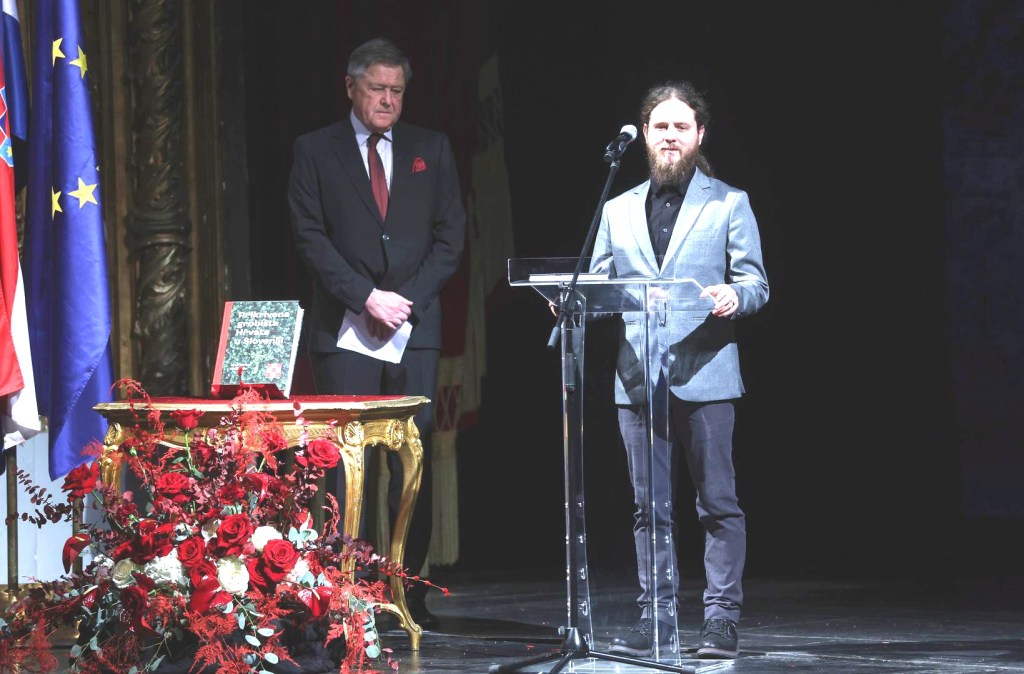
In early July of this year the European People’s Party/EPP group attached to the European Parliament called for a dignified burial for the victims of all totalitarian regimes, including those murdered under communist terror. On July 8, 2025, the European Parliament had endorsed a resolution on preserving the memory of the victims of the post-war communist period in Slovenia, sponsored by a Slovenian member of the European People’s Party (EPP), Romana Tomc. There are six people representing Croatia in the EPP group (HDZ’s Karlo Ressler, Nikolina Brnjac, Suncana Glavak, Tomislav Sokol, Davor Ivo Stier and Zeljana Zovko) and it is to be hoped that they were involved in getting this resolution through EUP but one cannot but wonder why it does not specifically, in name, apply to Croatia as well as Slovenia. Why one of tghem did not seek for the same but separate resolution for Croatia!? This may emerge soon, hopefully, but if it does not one would be justified in saying that such a move speaks volumes about their political loyalties, at the expense of hundreds of thousands of victims of communist crimes in Croatia! It is true that tens of thousands of Croats were murdered by communist partisans, who now call themselves anti-fascists, immediately after WWII under the passage of forced repatriations and dumped in pits and mass graves in Slovenia, many of which have been discovered over the past two decades, and this fact in itself means that the above EUP Resolution on Slovenia will benefit at least some Croats murdered because they fought in the war for independence and not communism.
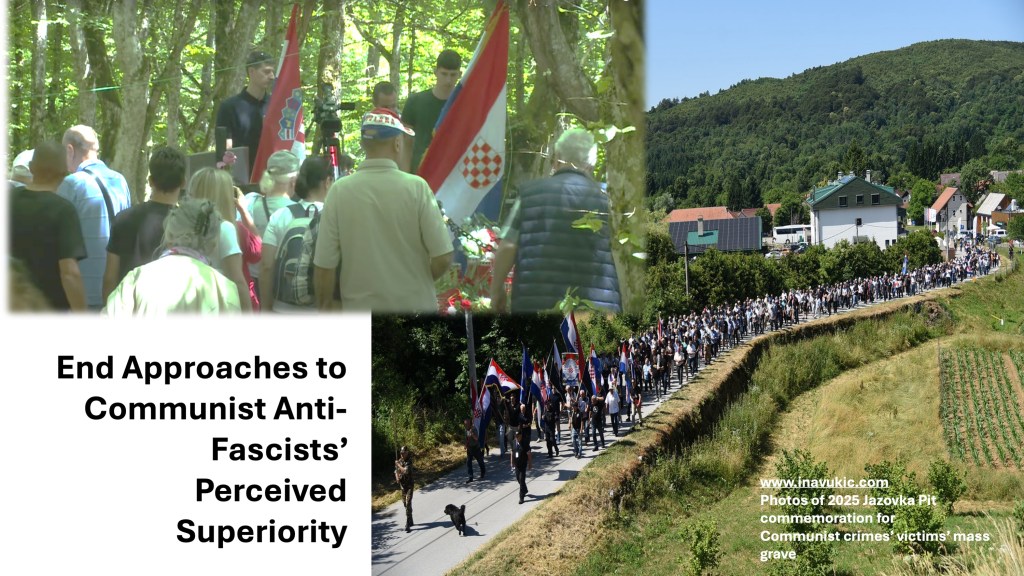
In my last post I wrote about the planned 23 August 2025 Christian funeral and burial rites to be organised for 341 out of 814 victims of communist crimes found in the Jazovka Pit, which sounds like something that would result from the above EUP Resolution for Slovenia. The mainstream media in Croatia, though, has not covered this information, only some churches and some individual social media pages have. One must question the motives behind that. What is sadly obvious is that Croatian government-controlled mainstream media, like the government and political power that finance them, evidently may be guided by a fear of what damage dignified burials of victims of communism may do to their own image or the image of families of those who work there. Indeed, that same media, to my knowledge, had not even covered the July 8th, EUP Resolution with regards to dignified burials of victims of communist crimes in Slovenia!
“This vote is about truth and dignity, not only for Slovenia’s victims, but for all who suffered under communism… Today’s vote serves as a litmus test: now we see who in the European Parliament stands with the victims of communist terror, and who has double standards,”
said Romana Tomc in EUP on July 8th, 2025.
Rasa Juknevičienė MEP, Coordinator of the informal MEP Group on European Remembrance, warned of the dangers of ignoring history: “Burying the past without truth allows its horrors to return. We see it again in Ukraine: mass murder, deportations, gulags – the very crimes we thought were left behind. Communist totalitarianism has still not been fully condemned, either politically or legally. That leaves Europe exposed.”
The Resolution, adopted by the European Parliament on 8th July also called on the left-leaning Slovenian government to reinstate the Day of Remembrance for the victims of communism, a commemoration it recently abolished. It also demands further investigation of over 750 known mass grave sites, proper burial for the victims, and full access to Yugoslav-era secret police archives so that crimes against humanity can finally be uncovered and documented. Croatian MEPs should do the same for Croatia which has over 1000 known mass graves of victims of WWII and post-WWII communist crimes, with a new one being unearthed almost every month or two. Croatian landscape, forests have become to resemble an enormous graveyard of Croats who fought for or wanted independence in World War Two. Surely, this deserves the same consideration by the EUP as Slovenia received. All that is needed for this, as I see it, is that at least one Member of EUP from Croatia, be they from EPP, be they from S&D alliance (Socialists and Democrats), be they from Greens, Patriots or any other political group in it, stands up, shakes off the double standards practiced in Croatia regarding WWII and post-WWII victim groups, and obtains the same resolution as Slovenia’s MP did. After all, both Slovenia and Croatia were once state members of the former communist Yugoslavia whose totalitarian regime and individuals operating it are responsible for those horrific crimes.
The issue of post-WWII reprisals by the communists against those who were thought to have collaborated with the Nazi occupying forces and against those who did not collaborate but wanted an independent Croatia has been the cause of deep divisions in Croatia for the past three decades especially and national reconciliation has still not been achieved. In many cases of mass graves discovered human remains are yet to be exhumed and most victims are yet to get a decent burial.
Perhaps national reconciliation on facts of history and victimhood in Croatia is not being achieved because those justifying communist crimes fear that not doing so, would criminalise communists and those who fought against fascists in WWII and after it. Sandra Gomez Lopez, the Spanish member of EUP S&D, noted on July 8th that the resolution regarding Slovenia criminalised those who fought against fascism and Nazism, while portraying potential Nazis and collaborators as victims. Double standards for victims of crimes do thrive still, even in EUP that is fighting against them, step by step. It would seem that Lopez considers necessary justifying some crimes and others not. She evidently does not think that on all sides war crimes did occur during the war and that crimes continued after te war. Communists could have done nothing wrong in her eyes!? How depraved is that! How sad that in 21st century a politician with such dehumanising views sits in a Parliament!
Such resolutions as the one regarding victims of communist crimes in Slovenia may not stamp out the injustice to humanity dished out by politicians such as Lopez and they may continue the rhetoric that dignity to victims of communist crimes distorts facts of history! Then one must ask: which facts of history? The ones concocted by the communists themselves or the ones unearthed in hundreds of mass graves after the fall of communist! What resolutions, like the ones delivered by EUP during the past two decades with regards to totalitarian regimes and their victims, achieve is pressure that gradually strips off the superiority of political ideology communists had pinned onto themselves, aide by the fact that they labelled themselves as anti-fascists when in fact their brutally murderous nature is nowhere near what an anti-fascist symbolises. They made this superiority even stronger when they started calling themselves anti-fascists, for personal and monetary gain from the West I might add. With every mass grave uncovered in Croatia their perceived superiority weakens, with every dignified burial of victims of communist crimes their perceived superiority weakens and when the government officially acknowledges the rights of victims of communist crimes then the perceived superiority of anti-fascists will disappear. Into a dark abyss, as deserved. Ina Vukic



 Croatia, the War, and the Future
Leave a comment