
Perhaps this book launch will change matters in Croatia regarding the banning of communist Yugoslavia symbols; otherwise, the presence of government dignitaries at the launch will be nothing more than a mockery against the victims.
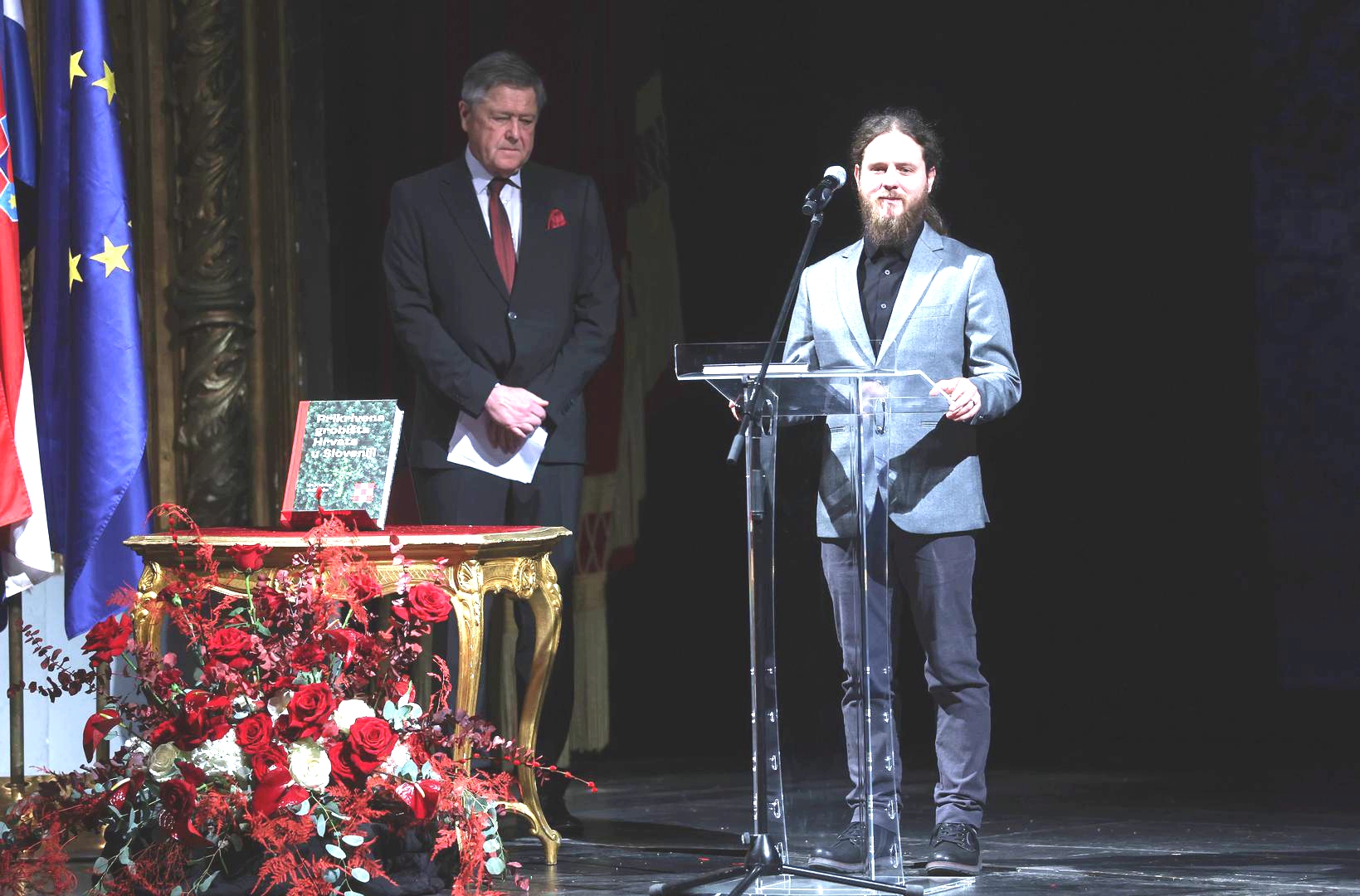
On February 11, 2026, a presentation was held at the packed Croatian National Theatre in Zagreb, which went beyond the usual literary promotion. The representative scientific monograph “Hidden Graveyards of Croats in Slovenia”, authored by historian Prof. Dr Mitja Ferenc and archaeologist Dr Uros Kosir, was presented as a major work that, for the first time in Croatia, presents scientifically established knowledge about the mass murders of Croatian prisoners and civilians after the end of World War II. However, there have been a number of books by historical scientists written during the past couple of decades about these and other communist crimes against Croats, especially those after the Second World War ended. More than enough evidence of the horrific crimes, hidden from the public eye during the communist Yugoslavia regime, to warrant a complete ban on Yugoslav insignia in Croatia, if for nothing else than for the sheer agony they cause to multitudes of families who had lost a member to the cruel and horrendous murders and slaughters.
The book launch was attended by senior state officials, including Prime Minister Andrej Plenkovic and the Speaker of the Parliament, Gordan Jandrokovic, as well as former Slovenian Prime Ministers Janez Jansa and Miro Cerar, and numerous guests from political, religious, and cultural life.

The initiator of the project and the president of the Školska knjiga publishers board, Dr Ante Zuzul, pointed out that this book, on 735 pages and supported by more than 1,200 scientific notes, takes away any basis for those who would like to dispute or relativise Yugoslav communist crimes. The monograph is not just a historical narrative, but a precise technical document based on research from 17 archives and more than 450 professional articles.
“The dark secrets hidden in the Slovenian forests, in the largest cemetery of Croats, kept in the painful memories of thousands of those who mourned the loss of their loved ones – fathers, mothers, sons, daughters and relatives – are slowly coming to light today with the help of historians, archaeologists, forensic experts and witnesses,” said Dr Ante Zuzul and continued: “It is known that the atomic bombs dropped on Hiroshima and Nagasaki killed more than 240,000 people in order to end World War II. And after the end of that same war, a significantly larger number of Croatian prisoners, women, children, elderly people and soldiers were massacred in Slovenian forests and on crossroads. Speaking of Slovenian forests, we must remember the Katyn Forest in Poland, where the Soviet secret service NKVD, under the direct orders of Joseph Stalin, killed more than 22,000 Polish intellectuals, officers and civil servants. Unlike the Katyn Forest, significantly more Croats were killed in Slovenian forests, and one of the most serious crimes against humanity was committed, about which the world knows almost nothing to this day”.
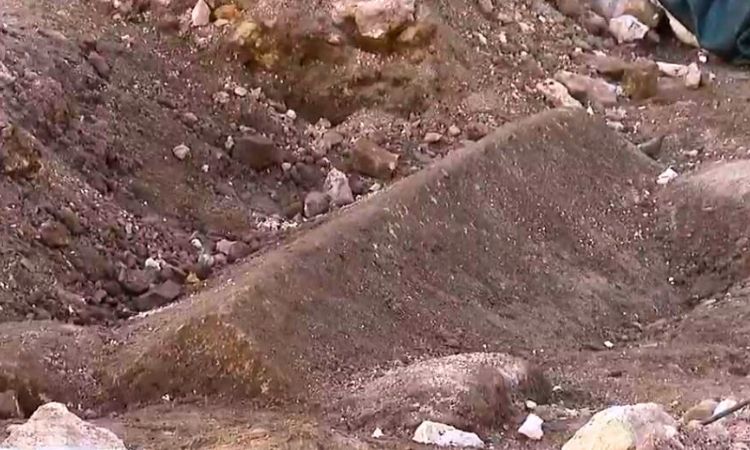
A dedicated chapter of the book covers the technical details of exhumations, which represent the pinnacle of modern forensic archaeology. Dr Sc. Uros Kosir explained how archaeological data becomes the only source of information when documentation of executions is missing or destroyed. The research process described by the authors begins with modern non-destructive methods, such as Lidar (laser terrain imaging), which detects micro locations and ground irregularities that point to collapsed pits.
When the sounding confirms the presence of remains, the stratigraphic excavation method is used. Each layer of soil is removed with extreme care in order to document the existing state (in situ). It is precisely these archaeological findings — from the position of the shell casings to the position of the bodies — that allow the reconstruction of the act of liquidation itself. For example, the discovery of wire on remains and the specific position of the victims’ hands are irrefutable evidence that these were organised executions of tied prisoners.
Although personal identification of thousands of victims is difficult, anthropological processing has made it possible to determine the demographic structure, confirming the presence of women and children among the soldiers. Artifacts played a key role in proving nationality: characteristic items such as rosaries, parts of Croatian military uniforms, personal tobacco cases and shoes, which undoubtedly confirmed that the columns of those fleeing westward ended up in the Slovenian pits.
The innovation of this monograph is also evident in the use of modern technology. In addition to 99 maps and 839 photographs, the book includes QR codes that let readers use smartphones to precisely locate the graves. The authors processed 14 exhumed cemeteries and 32 confirmed locations within a wider network of up to 750 hidden cemeteries across Slovenia.

Speakers at the promotion, among whom were historians Dr Robin Harris and Dr Zlatko Begonja concluded that this work is a necessary step toward fulfilling European resolutions condemning totalitarian regimes. As Mitja Ferenc pointed out, the purpose of the book is for the victims to finally receive a dignified burial and to stop being “numbers in sacks and boxes”, which would finally compensate the civilisational debt to the generations whose fate was shrouded in silence for decades.
In recent years, several European countries have enacted laws prohibiting the public display of communist symbols, but not in Croatia. Yet, more than any other country in Europe, Croatia seceded from communist Yugoslavia by the will of its people, wielding a glorious victory over communism for which it paid in rivers of blood. And to date, with all the evidence of horrific crimes committed by the communist regimes against patriotic Croats, Croatian governments have not banned communist Yugoslavia insignia or symbols on the streets of their country. Shame on them! Ina Vukic






Leave a Reply