
There’s a worldwide consensus that after many years of stability, world food prices have jumped 85% since 2005 and Croatia is not excluded from this formula. The alarming levels of unemployment due to eroded manufacturing industry, production – closure of production plants and widespread corruption in the privatisation of manufacturing firms – have long ago prompted many a warning of a looming purchase power crisis in Croatia that could only lead to poverty and hunger.
At the end of the food chain comes the real crunch: among the poor, particularly the urban poor as people living in towns and cities cannot grow and produce food, those most likely to go hungry are children. If young children remain malnourished for more than two years, the consequence is stunted growth – and stunted growth is not merely a physical condition. Stunted people are not just shorter than they would have been; their mental potential is impaired as well. Stunted growth is irreversible. “Chronic hunger deprives children of the essential proteins, micronutrients and fatty acids they need to grow adequately. Globally, it is estimated that nearly 226 million children are stunted – shorter than they should be. In addition, stunted children score significantly lower on intelligence tests than do normal children.” https://www.freedomfromhunger.org/world-hunger-facts
UNICEF’s 2014 report “Children of Recession” had placed Croatia’s levels of children living in poverty and at the brink of poverty at alarming levels. “Soup kitchens”, “social shops” – that give away donated non-perishable food and personal and other hygiene goods to the poor – and countless charitable efforts to feed the poor (in addition to the government’s social welfare programs) have become a way of life for many in many parts of Croatia.
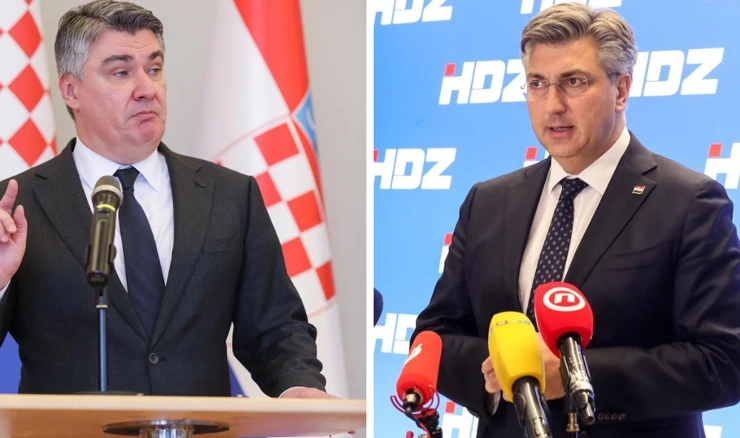
Despite such an alarming situation with poverty and hunger the Croatian Prime Minister Zoran Milanovic had, soon after the release of the said UNICEF Report, branded the reports of hunger in Croatia as populist and simply denied any truth to the reports of hungry children in Croatia!
In November 2014 Mladen Levak, member of Croatian parliament for Labour party, addressed in parliament regarding the UNICEF report of 60 000 children living in poverty and asked the government whether the state would pay for meals in schools for poor children … Prime Minister Zoran Milanovic got to his feet quickly and replied: “…That is populism. Let’s not be populists and say that today people live hungry in Croatia. The problem is bigger, people in Croatia eat, there’s more food than ever but the question is in food quality, quality food costs more. There’s lots of food that is cheap, which is not directly damaging but in long term it is damaging. And those are the habits we need to start changing slowly…if someone truly hasn’t the resources for food then the state is there to help them, if someone is truly hungry…that’s not the problem in Croatia, the problem is the abundance of bad food … schools are important in this …” Equally swiftly, Mladen Levak presented his rebuttal to the Prime Minister’s claims and said that such an opinion is Prime Minister’s but that the Prime Minister does not read the daily press to discover such cases of hunger; that there is food in abundance, indeed, in Croatia, but not with those who cannot obtain it due to poverty. “There are funds to fix that by stopping excessive spending in parks or ministerial office décor, spending excessively in various parties and ceremonies ….yes there is food but not for all – for some opportunities pile up while for others poverty piles up,” insisted Levak in the Croatian parliament.
Source video:
The mark of a good politician is the ability to guide citizens away from populism. Unless countered, populism blocks the policies needed to address crises. But in Croatia, poverty and hunger are not sources of any populism, bar in the misguided head of the Prime Minister and those who politically agree with him – they are real and must not be used as political tools that suggest the addressing of these real issues is nothing more than some kind of support for the people struggling against the privileged elite, as populism would have us do. Why, amidst so much compelling evidence of poverty and increasing poverty in Croatia, the Prime Minister chose to label the product of poverty – hunger – as populism can only find an answer in the fact that it is Election year in Croatia.
The Croatian Prime Minister, Zoran Milanovic, and Minister for social welfare, Milanka Opacic were at odds regarding hunger among Croatian children soon after the November 2014 Milanovic debacle in the parliament; Opacic did not deny child hunger but swerved off the mainstream road for a while saying, wrongfully, that it’s by a huge majority the Roma children and foreign citizens who do not qualify for social welfare in Croatia that are hungry!
In early March 2015, though, the Croatian minister for social welfare, Milanka Opacic, had announced a new measure to deal with the issues of hungry children at schools. She said that an extra 24 million Kuna (cca 3.2 million EURO) has now been earmarked to cater for warm meals for school children primarily. The funds she said will be secured by diverting funds earned from the state lotteries and will be distributed to humanitarian organisations who will then distribute the funds for families not included in the state’s social welfare program but are living on the brink of poverty and experiencing difficulties providing food for their children. There are more and more families in Croatia who cannot afford paying for their child’s school meals. The idea is for the humanitarian organisations, who are successful at winning the tender for a slice of the 24 million Kuna (to be released mid-March) to go out and seek out or identify the families within the communities who would qualify for this new “handout”. Many local governments in Croatia already subsidise school meals in their areas and, hence, minister Opacic believes the extra 24 million will be enough to satisfy the needs of all.
“Social security system is often rigid and, because of a few Kuna higher earnings than upper limit individual families do not qualify for social welfare. For example, a single mother with two children earning 2,400 Kuna (cca 320 EURO per month) who has three children has no right to social security. Civil society organisations can regulate for much looser criteria and quicker response (than a government office),” said minister Opacic on 2 March.
It’s most unacceptable for a minister of a government to accept “looser criteria” in the area of distributing government/taxpayer funds to the needy. Such attitude and practice are fraught with dangers of corruption and favouritism; government must in every civil society demand stringent criteria and accountability from community organisations in receipt of its funding.
Identifying families needing such help in the community takes “manpower” and other operating/administration resources. Given that Opacic’s social welfare ministry already have the data about where most such families are living one would think that the funds earmarked for this program would spread much further among the needy were the schools in those areas – who already provide meals to children whose families are in receipt of social welfare – were given the task of identifying the additional children to feed. But, it’s Election year in Croatia and it seems to me that the governing Social Democrats are more interested in reaching more voters within the communities, whose job will be to go out and identify families for this additional school-meal assistance, than they are in ensuring that most of the funds are actually spent on food!
Be that as it may, additional help is needed and there are charitable organisations and citizens’ initiatives in the alleviation of child hunger that would perform the task of identifying the needy families/children for this additional social welfare project most responsibly, with a benevolent outlook. The ideal winner of the announced tenders for organisations who would be given the task of distributing the extra 3.2 million EURO would be those charitable organisations that can deliver with the least or minimal operating/administration costs eating into the funds provided; the organisations that will significantly rely on voluntary staff identifying the families who qualify. This is, after all, a fight against hunger among vulnerable children, which hopefully will not last or linger year in and year out. Ina Vukic, Prof. (Zgb); B.A., M.A.Ps. (Syd)


Leave a Reply to inavukicCancel reply