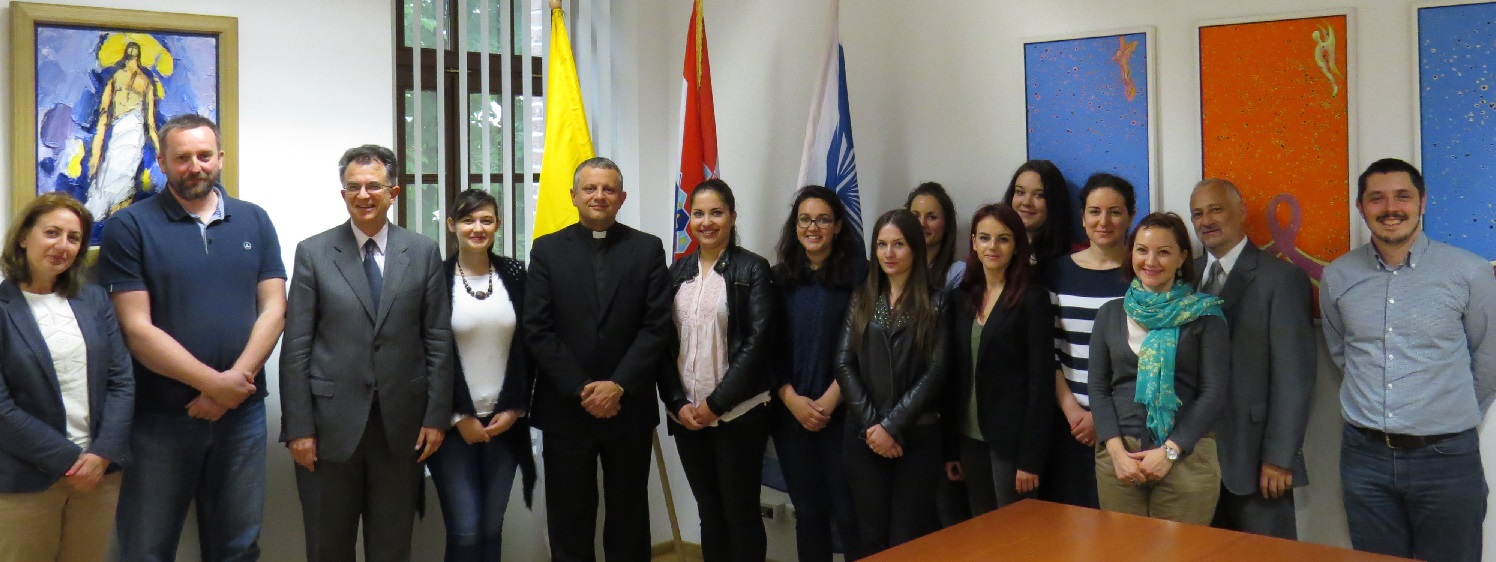
Croatian Catholic University http://www.unicath.hr
Zagreb, Croatia
Photo: http://www.unicath.hr
Recently, readers and followers of this blog asked me to consider writing about education for international or foreign students in Croatia and, so, here I am. Croatia prides itself on the level of adult literacy, which is at the rate of around 99%. Croatia loves education and knowledge and has a long and successful history in providing tertiary and other education to foreign nationals or international students.
Higher Education in Croatia
Croatia offers very high quality higher education. There are more than 130 higher educational institutions in Croatia. These consist of public and private universities, polytechnics/institutes and colleges of applied sciences. These institutions are subject to quality control and supervision by the Croatian Ministry of Economy, Labour and Entrepreneurship.

Zagreb, Croatia
There are two different types of study available to students:
• university studies: academic programs carried out solely at university;
• professional studies: professional programs carried out at polytechnics/institutes and colleges of applied science.
As Croatia is part of the Bologna Process, its higher education system is highly compatible with the education systems in Europe and, therefore, directly recognised outside Croatia. The structure of the higher education system in Croatia is divided into three cycles: undergraduate, graduate and postgraduate. The European Credit Transfer System (ECTS) is also accepted and classes taken in Croatia have an equivalent value all over Europe.
Universities specialise in scientific research and development, while polytechnics/institutes and professional schools prepare students for work needed in their local community.
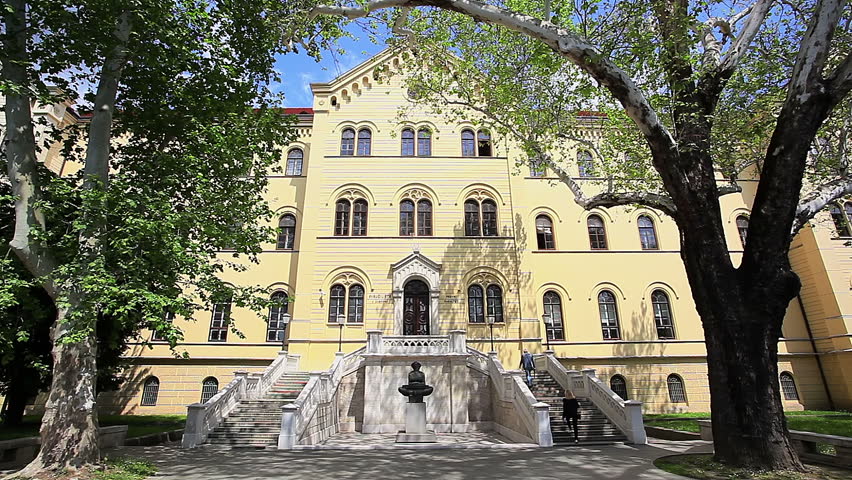
main building
Students spend between three to four years in an undergraduate study program (depending which program they are studying) and may move into graduate study, which is the equivalent of postgraduate study in the UK. Graduate courses typically last one to two years and on completion the student is awarded a Masters qualification with reference to a specialist subject. Alternatively, a specialist professional qualification can be taken at graduate level, which lasts one to two years. The student will then become a ‘specialist’ of the relevant profession. Postgraduate study in Croatia refers to Doctorate-level study. This takes three years to complete and consists of scientific or research training. Upon completion the student is awarded the title of Doctor of Science or Doctor of Arts depending on the subject.
Although English is widely spoken, many courses are taught in the Croatian language. Foreign students are encouraged to learn the Croatian language in order to fully understand the culture of their surroundings and participate in their postgraduate course. Universities often offer additional intensive language courses, such as the one at the University of Zagreb – Croaticum. Croaticum, by the way is a fabulous way of spending a semester or two or more in Zagreb just studying the Croatian language and connecting meaningfully with the culture and society. Not directly associated with tertiary studies in Croatia the Croatian government actually offers a number of scholarships to Croatians living abroad wanting to study Croatian in Croatia.
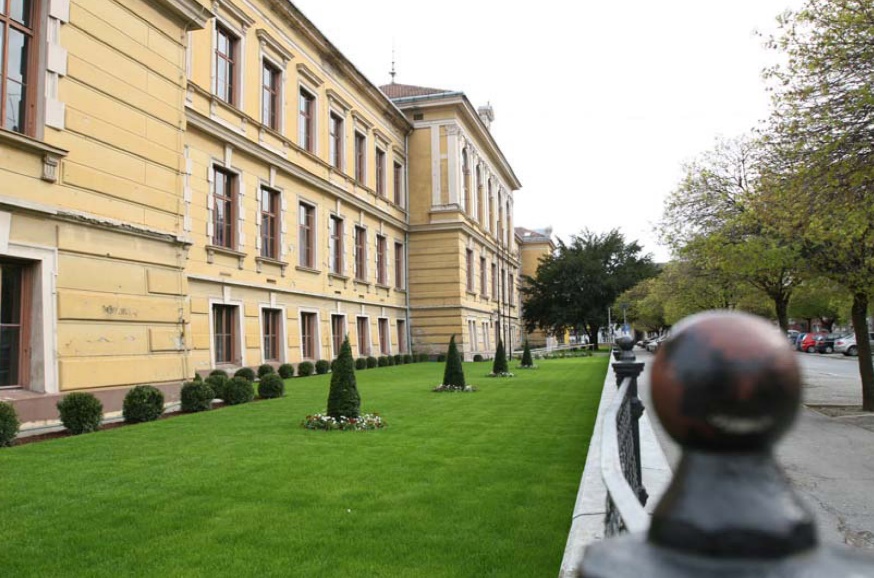
University of Osijek, Croatia
Educational Opportunities
Education in Croatia is available nearly all year round. Most students attend during the standard academic year, which begins in October and will go through September with time off throughout the year. Exams are scheduled throughout the year as well, since most schools operate on a semester schedule; winter semester: beginning October to end of January and summer semester: end of February to mid-June.
Costs of Higher Education
Higher education is directly regulated and sponsored by the Ministry of Education. Therefore, schooling is free for Croat nationals and the cost of studying for foreign nationals, tuition fees, at a higher education facility depends on various factors, including whether or not the educational institution is private or public. The institutions themselves set tuition and fees, not the government. Costs for international students will range significantly from one school to the next as well as from one study program to the next. The level of tuition fees depends on the type of study program and its duration. It is therefore important that prospective students directly contact the higher education institution they are interested in for precise information about tuition fees.
For most undergraduate degree programs, international students can expect to spend about €800 to €2500 per year. The cost for technical schools tends to be significantly higher than this. The highest costing programs include those in the sciences and medical programs. The costs for post graduate education is more, but will range significantly from one school to the next. E.g., currently, tuition fees for undergraduate degree programmes in the humanities and social sciences can range from 6,000 Kuna (approximately 800 EUR) to 16,500 Kuna (approximately 2,200 EUR) per year, tuition fees for technical sciences are approximately 22,000 Kuna (approximately 3,000 EUR) per year and tuition fees for sciences and medical study are around 27,000 Kuna per year (approximately 3,600 EUR). Tuition fees for graduate and postgraduate programmes should be obtained by request directly from higher education institutions since they vary significantly.
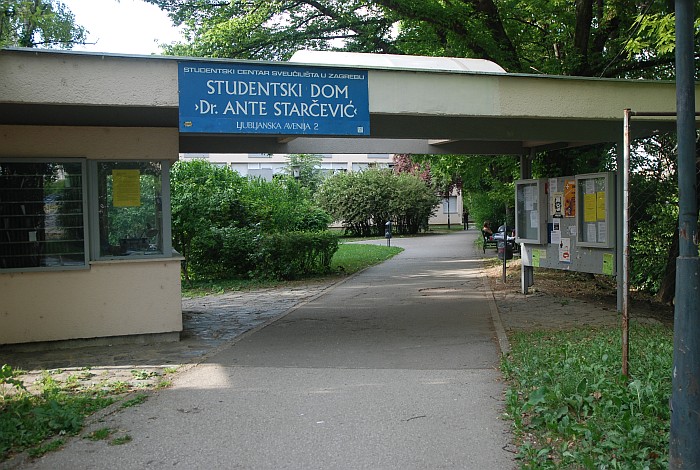
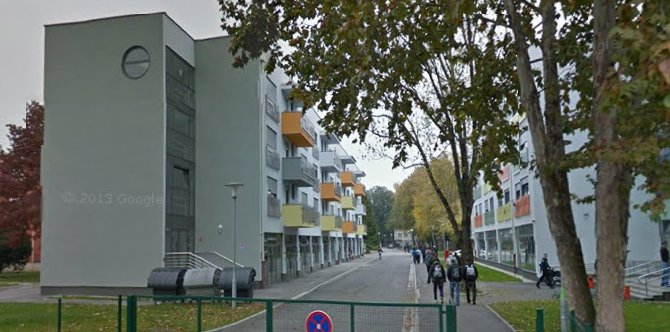
Then, of course, there are living expenses while studying in Croatia. As a rough monthly guide with current trends one may need between 400 and 700 Euro per month depending on where one lives (over and above tuition fees and depending which city one is studying in/living), which would include food, lodging, utilities, transport, books and some miscellaneous and incidental expenses. Student centres administer student dormitories set in large residential buildings that are quite popular with students for accommodation but private room rental with families or independent flats are on offer at quite reasonable rates.

Zagreb, Croatia
In order to study at Croatian higher education institutions, international students must have sufficient financial means for the duration of their stay in Croatia – either from personal sources or from national or international scholarships. The majority of Croatian higher education institutions do not currently offer any scholarships or financial aid for international students. However, there are a number of scholarships available to international students through bilateral programs administered by the Croatian Ministry of Science, Education and Sports, through university bilateral agreements, through programs such as CEEPUS, and Erasmus+ (including Erasmus Mundus), and programs managed by the Agency for Mobility and EU Programs.
Zagreb, Croatia
Travel Visa
Students need to have a student residence permit. This is obtained through an Embassy or a Consulate of Croatia in or for your home country or may be done through a local police office once you arrive in the country All EU nationals do not require a visa to enter Croatia. They are able to stay in Croatia for up to 90 days without a visa. Non-EU citizens should check with the embassy in their home country to see if they are exempt from needing a visa or if they are required to have one before entering the country.
Overall, education in Croatia can be diverse and exciting. Higher education institutions are often looking for students who wish to come into the country to help to diversify its population.
Croatia
Applying to study in Croatia.
Admissions to undergraduate study programs in Croatia are administered through a central online application system, for which prospective students must fill in an application form and select the study programs (up to 10) they wish to apply for at any higher education institution in Croatia. More information about the application procedure is available on Study in Croatia website in its section “How to apply”. Study in Croatia (www.studyincroatia.hr) is the name of the Croatian national internet portal designed to assist international students wishing to study in Croatia.
Higher education institutions administer admissions to graduate and postgraduate study programs in Croatia, so prospective students must apply directly to higher education institutions regarding the application process, deadlines and application documents.
It should also be noted that number of admissions to most study programs in Croatia is restricted, which means that the maximum number of places available for a specific study program is subject to an annual decision by higher education institutions.
Croatia
Entrance requirements to university and polytechnics are the same. Applicants need 12 years of formal schooling and the equivalent of a Svjedodžba o maturi (matriculation certificate). Language proficiency test is taken if the language of instruction is not the applicant’s mother tongue. Foreign students are usually required to complete a 2-semester course in Croatian language and to sit a final exam.
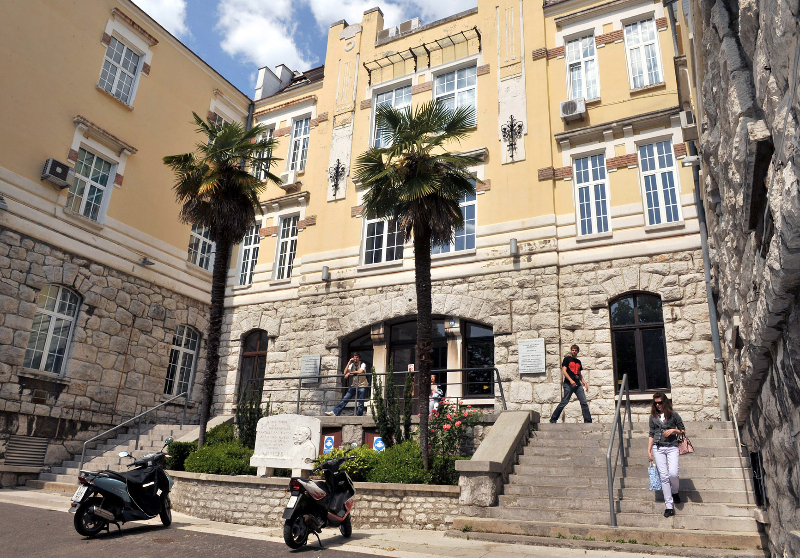
Croatia
Applicants who have completed their secondary education in a country that has an established system of external evaluation of secondary education should have the results of their final exams recognised by the Central Application Offices equivalent to the Croatian State Matura ( State matriculation). The deadline for submission of the results of final exams to the Central Application Office is normally in July. Applicants who have completed their secondary education in a country that does not have an established system of external evaluation of secondary education are advised to take the State Matura exams in subjects proscribed for admission to a particular study program. Namely, the results of the State Matura exams influence the candidate ranking in the selection process for admission to most study programs. Students may also choose not to sit the State Matura exams, in which case they compete for admission based on their high school grades and other relevant achievements.
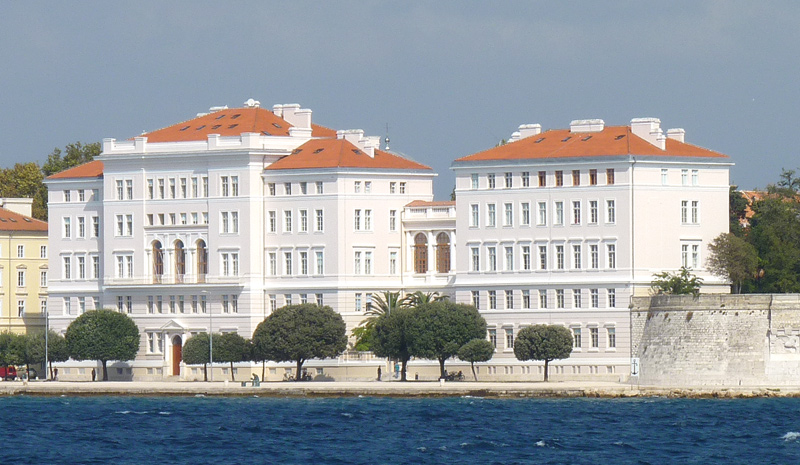
Croatia
A great place to find information on studying in Croatia is the Study in Croatia website. If you study in Croatia you’re a winner in more ways than the top educational one!
Ina Vukic, Prof. (Zgb); B.A., M.A.Ps. (Syd)
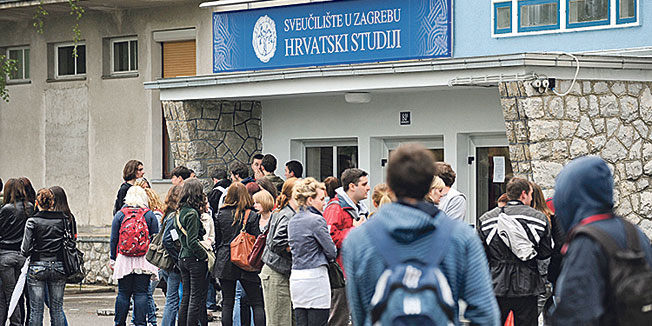
Croatian Studies Faculty
Zagreb University
Croatia 2014



 Croatia, the War, and the Future
Leave a reply to avtar Cancel reply