
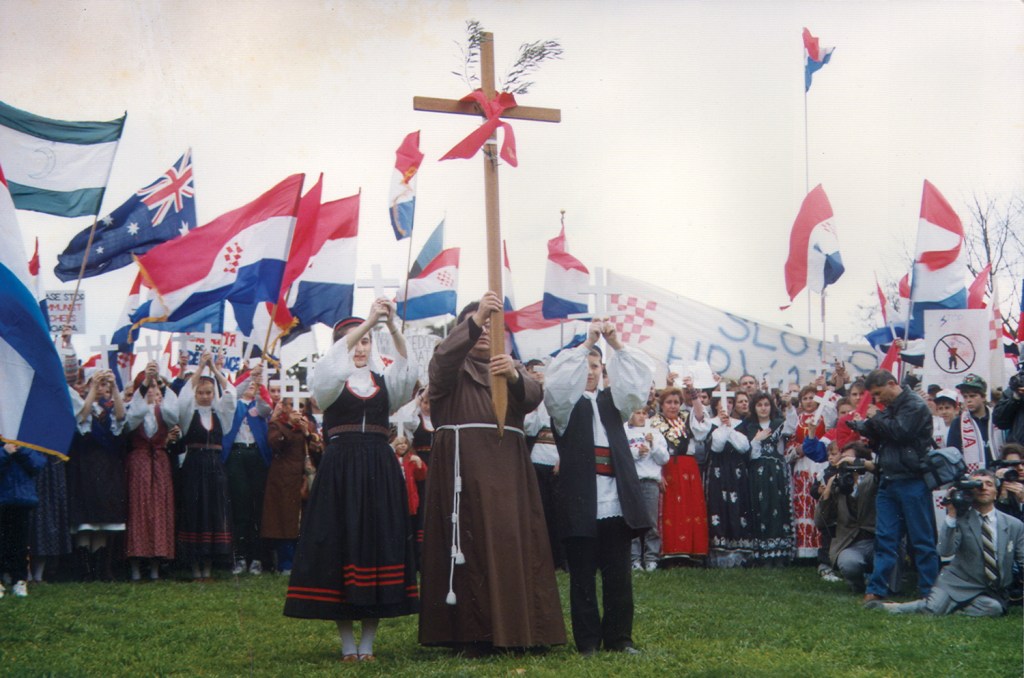
PHOTO: Branimir Bradaric/VL
Following last week’s identification of the remains of 12 people counted among the missing, the Republic of Croatia is still searching for 1,771 persons missing from the Homeland War, of whom 480 are missing or killed in the Vukovar-Srijem County, and 357 in the Vukovar area. The Ministry of Croatian Veterans’ Affairs organised an identification of the remains of 12 people who were missing or killed in 1991 in Vukovar on March 10, 2025, including eight Croatian veterans and four civilian victims, including one woman, and the victims were aged 32 to 64.
This is a painful reminder of how many people are still unaccounted for more than three decades after the country’s independence war ended in 1995.
These are locations that were searched on several occasions between 1997 and 2014 and where nothing was found at that time but following information that there were graves at these locations, the Ministry of Croatian Veterans’ Affairs decided to search everything in detail again and, as in some previous cases, found remains at previously searched locations.
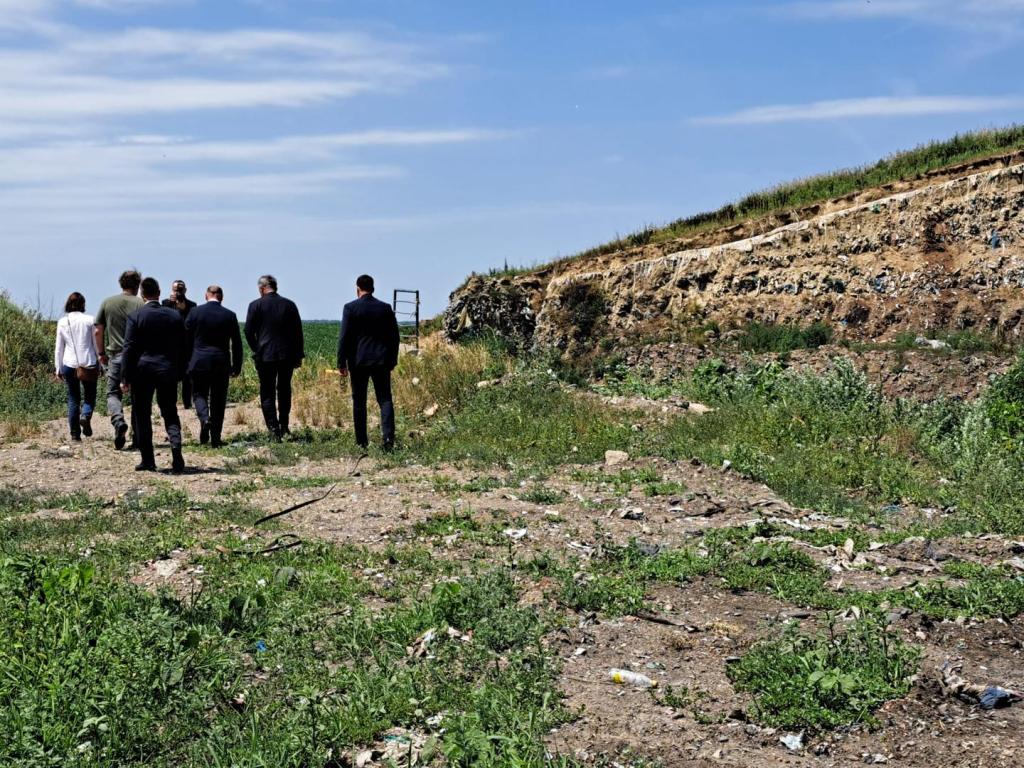
“The data on the time and place of the deaths clearly indicate that these are the remains that were moved, possibly on several occasions, thus committing a crime upon crime. With the clear aim of concealing the crime, the remains of the victims were moved to the area Petrovacka Dol, a waste dump, where the criminals believed that we would never find them,” said Minister Medved, adding that many doubted that anything would ever be found on that huge mountain of garbage.

It is said by the Croatian authorities that this is the most demanding and longest investigated location of a mass grave, as shown by the following indicators: in 570 working days – more than 110,000 cubic meters of various garbage and waste were excavated, inspected and exported, followed by the removal of mountains of asbestos. After two full years of tireless and dedicated daily work in the field, under a pile of waste, including animal bones, more than 2,000 fragmented bone fragments were found on an area of about 400 square meters, which were then carefully exhumed so that not a single bone remained, and the exhumation itself lasted almost two months.
Given the large number of samples on which DNA analysis is being conducted and the significant damage caused by the impact of waste on the remains over many years, the identification process is also extremely demanding and time-consuming.
During the HDZ/ Croatian Democratic Union government mandate from October 2016, information was collected on 477 possible sites of concealed graves and field research was conducted at 418 locations, searching approximately 997,000 m2. The most extensive field activities were carried out in the Vukovar-Srijem County, where six mass graves were found, and more than 40 individual graves in Croatia. During that period, the remains of more than 200 persons were exhumed, and 292 persons were identified, as of today’s identification.
“These are not just ‘solved cases’, these are human destinies, both of the missing and their families, who, after more than 30 years of searching, waiting, anxiety and uncertainty, we have enabled to finally learn the truth about the fate of their loved ones and to bury their remains with dignity, to have a place where they can light a candle and pray, a place where they and their loved ones can find their peace,” said Medved, adding that locations are still being searched in search of the remains of the victims, both in the Vukovar-Srijem County and in Banovina, where one person was recently found in Kostrici, whose identification is in progress.
On this occasion, an appeal was made to all who have information to share it with the Ministry of Croatian Veterans or other competent bodies of the Republic of Croatia, and Minister Medved thanked the families for their endless patience and trust, telling them: “Your expectations oblige us, and we will not stop until we find all our missing.”
He stressed that resolving the fate of those missing in the Homeland War is a priority for the Ministry of Croatian Veterans. “Our mission is to find all the missing, provide them with a dignified resting place, and ensure peace for their families. This is a strong message of our commitment to finding and identifying all victims,” said Medved.

Phot HINA/ Gordan PANIĆ/
Finding and identifying missing persons is undoubtedly essential to rebuilding a country after the war, and Croatia is no exception. Searching for missing persons is an opportunity to move beyond conflict lines and prejudice. Besides being able to bury their loved one’s in a grave they can visit, achieve certain peace of mind when questions and fears about their loved one’s destiny are answered via mere finding of the remains, families of missing persons found and those of the unfound bring special insight into the long-term impact of conflict and violence on individuals, on the fabric of society and on the relationship between citizens and the State. The experience of families of missing persons is sobering and humbling in many ways. Their individual stories are compelling in their own right, but they are also ‘vignettes’ of a larger history of war and peace, often still in the making in the case of Croatia as there are a large number of those still missing.
One of the most striking aspects of the experience of many families of missing persons is how the need to find answers passes from generation to generation. It shapes family history and identity, creating a ‘witnessing generation’ which carries the traces of their parents’ and grandparents’ trauma. Hence, I trust that at least in relation to the missing from 1990’s Homeland War this generational transfer of painful memory and questions will not grow century long legs, as the hundreds of thousands missing still from the murderous hand of communist regime in Yugoslavia during and post World War Two have. I trust the Croatian government will continue working hard on solving the destiny of the still missing from the 1990’s war and will succeed. Their work is made all the more difficult for they receive no assistance from the Serb aggressor side, which side it is claimed knows where all the mass graves are. “Our goal is to find the victims, but also to prosecute the criminals,” said Minister Medved last week and if the presence of the State Attorney, Ivan Turudic, at the press conference regarding the newly identified 12 victims is to be seen as indicative of such a plan to prosecute the responsible criminals, then justice for the victims will come, at least partial. But if such a press conference was staged for political reasons of point-scoring then the victims and their families are not likely to even smell justice let alone experience it. Ina Vukic




 Croatia, the War, and the Future
Leave a comment