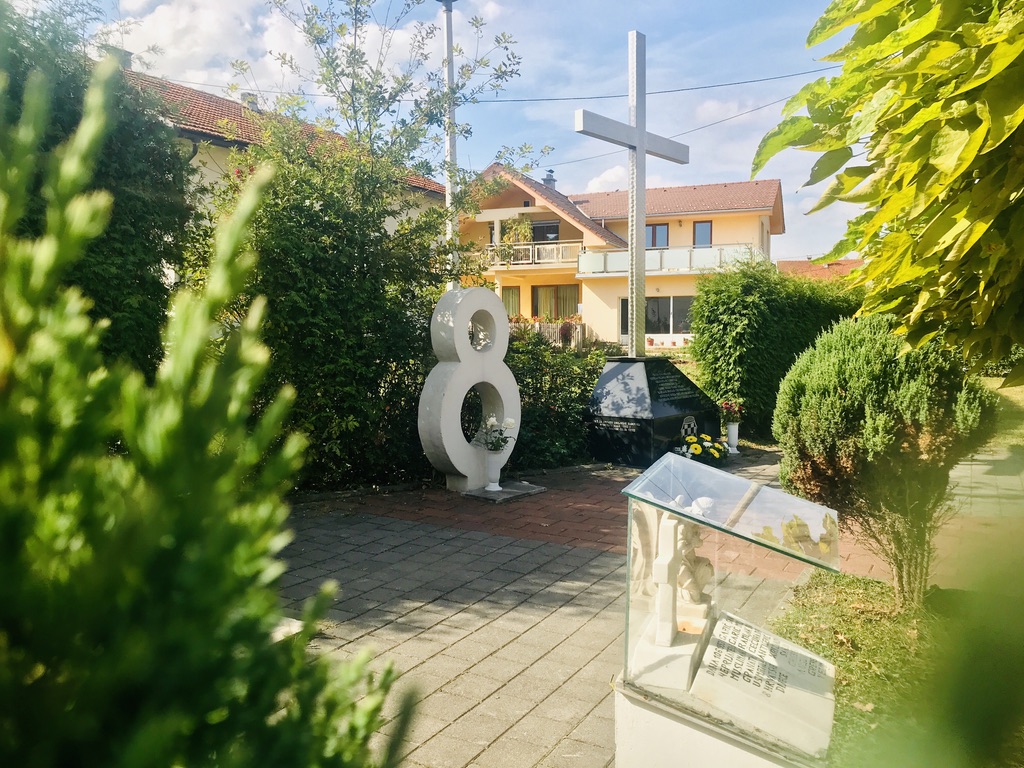
According to the latest news from Bosnia and Herzegovina, the Court of Bosnia and Herzegovina has on Wednesday 4th February 2026 confirmed the indictment in the case of “Mensud Kelestura and Others”, charging Mensud Kelestura and Hazim Jašarević with the criminal offence of war crimes against the Croatian civilian population.
According to the indictment, the accused are charged with participating in an artillery attack on the civilian population of the settlement of Podgradina on 10 June 1993, contrary to the rules of international humanitarian law, during the state of war and armed conflict in Bosnia and Herzegovina between members of the Army of the Republic of Bosnia and Herzegovina and the Croatian Defence Council (HVO) in the territory of the Vitez municipality.
The statement states that Mensud Kelestura, in his capacity as commander of the 325th Mountain Brigade of the Army of the Republic of Bosnia and Herzegovina, ordered the subordinate Brigade Artillery Group to carry out an attack on a populated area inhabited almost exclusively by civilians of Croatian nationality, although he was aware of the possible consequences for civilians and accepted such consequences. According to the indictment, the order was carried out by Hazim Jašarević, commander of the artillery group, through his subordinates.
It is further alleged that members of that group fired a 120 mm mortar shell from the Podlazine location, which fell between family houses on a children’s playground, killing eight and wounding five more children.
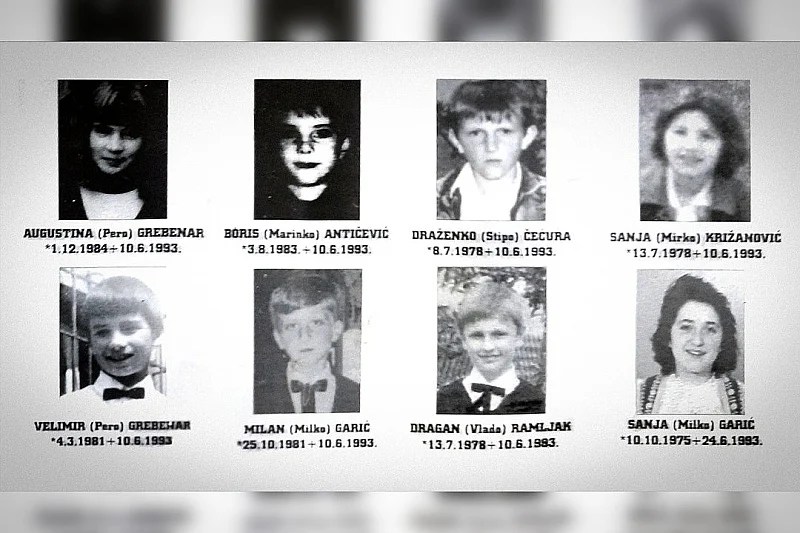
Augustina Grebenar was the youngest victim murdered, as she was only nine years old at the time of her death. Her brother Velimir Grebenar, siblings Sanja and Milan Garic, as well as Boris Anticevic, Drazen Cecura, Sanja Krizanovic and Dragan Ramljak were also killed.
The confirmation of the indictment created procedural conditions for the continuation of the criminal proceedings before the Court of BiH, during which the prosecution’s allegations will be considered in the course of the trial.
The case concerning the suffering of children in Vitez was at the BiH Prosecutor’s Office for about 20 years, having been forwarded from the Cantonal Prosecutor’s Office in Travnik.
The State Prosecutor’s Office previously confirmed that the investigation has been accelerated since the beginning of 2022, and that ballistics experts have been hired.
The indictment was filed on December 30, 2025.
The Association for Preserving the Memory of Child Victims of War “Eight” from Vitez, Bosnia and Herzegovina says the following in its brochure:
“June 10, 1993. 8:45 p.m. is the time of the shell fall, which turned the place of children’s play and laughter into a place of crying, screaming, moaning, pain, massacre… The 120mm shell fell only 2 meters from the table where most of the dead children were sitting and 2 meters from the basket where some of them were playing.
The piercing sound of the shell explosion was deafening, the smell of gunpowder and smoke, the horrific scenes of dismembered bodies of children falling around the table and body parts lying everywhere were horrific. The oak tree’s crown, which provided shade over the table, was so damaged that, after a few years, it dried up, and locals reportedly spent days removing body parts from the remaining branches.
Only a few seconds later, some of the children’s parents and neighbours arrived at such a horrific scene, and in such chaos, they went around the bodies and looked for those who had survived. One of the first to arrive was Mira Garic, who approached her son Ivan, who was conscious but immobile. After they saw that his brother Milan had been killed on the spot and was lying lifeless without any body parts, he told his mother to go and see what was happening to his sister Sanja, who had set off home and found herself halfway, about twenty meters from the shell. Everything happened as if in a dream. Sanja was also found unconscious, lying motionless, but she was showing signs of life, as were Agustina and Sanja Krizanovic.
The bodies of the surviving children were transported by people who came to help in their personal cars to the war ambulance, which was located in the basement of a business building in the centre of Vitez. After first aid was provided in the Vitez war ambulance, the seriously wounded children were transported to the war hospital in Nova Bila, while Dario Garic, who was slightly wounded, remained in Vitez and was then discharged home. From Vitez, people travelled to Nova Bila via surrounding country roads that passed the Nebasce cemetery, the Princip company, and the villages of Mosunj and Gladnik. The fight for the lives of the wounded children in the hospital lasted almost the entire night. While the doctors fought for the lives of the wounded children, at the same time, parents buried their children who had died in the Nebasce cemetery in the early morning hours due to exposure to sniper fire from the positions of the Army of Bosnia and Herzegovina…”
“It may be that our justice sees as in a mirror image, left where right should be, evil reflected back as good, good as evil, your angel as her devil,” said Cadfael, “But God’s justice, if it makes no haste, makes no mistakes.” (Ellis Peters, The Potter’s Field).
Ina Vukic





 Croatia, the War, and the Future
Leave a comment