
This weekend starting Saturday 18 May 2024 several commemorations of Croatian victims of Yugoslav communist crimes from May 1945 and after across Croatia, Bosnia and Herzegovina, Slovenia and the diaspora will draw a great number of people into a state of sorrow. But also, into a state of overwhelming pride for being a part of or embracing the priceless battle for freedom and independence from communist Yugoslavia Croats who fell contributed to. The cessation of the long-standing remembrance ceremonies at Bleiburg field in Austria, under the pressure of Austrian authorities, is of course, to my view, an unforgivable act against human rights of mourning and against human decency.
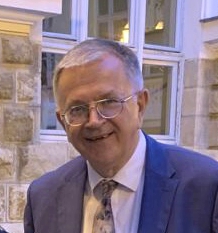 In light of marking this sacred time for remembering and mourning the Croatian dead at Bleiburg and along the “Way of the Cross” and issues affecting the remembrance I bring to you an interview with Dr Josip Stjepandic, hoping it will shed a light for you on matters perhaps not known to you. Prof. dr. Josip Stjepandic was born in 1961 in Modrica, where he finished elementary school and high school. He completed his studies in mechanical engineering in Zagreb. At the Technical University in Graz (Austria), he received his doctorate in 1985, as the youngest candidate in the history of that university. He has been living and working in Germany since 1988, where he is one of the directors of a technology company. He is married and the father of three adult sons. He is the author of 18 books and over 400 professional and scientific papers. He is the editor of 5 scientific journals of the highest category. He occasionally works for foreign universities as a consulting professor. He works for the European Commission as an expert for scientific projects. He is the vice-president of the International Society of Transdisciplinary Engineering. He is the president of the Croatian Academy of Sciences and Arts in the Diaspora and in the Homeland.
We usually start the interview with one general and seemingly simple question to which a comprehensive answer should be given. However, considering the divisions that Bleiburg (which also includes the events of the Way of the Cross) brings in Croatian society, is it difficult to define what Bleiburg is for Croats today?
On the surface, the question is very easy to answer: Bleiburg (including the post World War Two Way of the Cross) is a symbol of severe suffering for those who identify Croats, for those who identify a Yugoslavs it is a symbol of victory over the “internal enemy”, and identity consumers do not waste time on such topics. Deeply, it is a matter of learning from a huge national disaster. Unfortunately, there are few who have learned something valuable from it for the next generation. We saw a “Little Bleiburg” in 1991 in Vukovar. If Croatia had succumbed in 1991, it would probably have been the scene of another genocide, as it was in 1995 in Srebrenica.
I am convinced that if there was wisdom and patriotism in the corridors of power, Croatia would have used the past 30 years of independence to prepare so that such a disaster would never happen again. On the example of the drone that fell in Zagreb in March 2022, we see that Croatia is not at all ready for many real challenges. And for this reason, every future generation should be made aware of what happened in Bleiburg (1945) and why.
Let’s put aside the emotions of those who are for the commemorating of Bleiburg massacres and those who are against, those who deny and those who strive to make the facts available, and let’s instead touch upon the scientific truth in the Bleiburg matter. According to your knowledge, tell us what is the truth about Bleiburg?
According to the British intelligence sources, which are difficult to dispute, at the beginning of May 1945, a crowd of about 200,000 Croatian soldiers and 500,000 civilians, mostly Croats, retreating from Croatia towards southern Carinthia, were stopped at the Drava River by British troops, who disarmed them under false pretences and handed them over to the Partisan troops, who commenced their barbarism on Austrian territory, where there were about 1,000 victims. The prisoners were then taken on marches towards the Southeast, and killed in several places, as evidenced by about 1,800 mass graves, most of which are still unexplored. No matter how you calculate, between the censuses of 1931 and 1948, at least half a million Croats are missing, very few of whom escaped by fleeing abroad. In the same period, the number of Serbs increased by about 700,000. These are the two “atomic bombs on Croats”, which historical researcher and publicist Roman Leljak vividly talks about. The answer to the question of who committed genocide against whom is also in his works.
It was the Croats who suffered the most at Bleiburg, however, members of other nationalities also suffered, but it seems that, except in Slovenia and Croatia, this crime is still being covered up, if not justified. Why is that do you think?
From my point of view, the situation is unfortunately much worse. Slovenia and Croatia are the only two members of the European Union that have not implemented the the European Parliament (EP) resolutions on the condemnation of totalitarian regimes, and that is because they are networked with management structures originating from the former communist regime. Not only are they silent about the crimes of Yugoslavia, but they are trying to gloss over them. On the Remembrance Day of the victims of totalitarian regimes, on August 23 last year, the youngest Croatian member of the European Parliament proudly laid a wreath on the grave of the communist Yugoslavia operative Jakov Blazevic, presumably to express his gratitude for the persecution of “enemies of the people” like Blessed Alojzije Stepinac. This is a metaphor for all the moral failures of current Croatian politics. It is not unimportant to note that the young gentleman, who was born in the days when communism was collapsing, is running for elections again and that another mandate in the EP appears to be smiling at him.
It is said that the grandfather of the Croatian President Zoran Milanovic himself participated in the massacres of Croats after the Second World War. Milanovic repeatedly mocked the victims of Bleiburg with his inappropriate vocabulary and is a staunch opponent of the commemoration. Instead of commemorating victims of Bleiburg, he commemorates those that fell for the fight for communist Yugoslavia at Sutjeska.
Prime Minister Andrej Plenkovic is the son of a former high-ranking propagandist of the Yugoslav regime, and already in his graduation thesis he expressed his admiration for Edvard Kardelj, who was the second fiercest persecutor of Croats after Tito. I can’t imagine that his father who nurtured him kept that fact from him.
Therefore, while this group is in power, there will be many problems, not only with regards to Bleiburg. Instead of showing by word and deed that the new people are different from their South-Communist ancestors, they follow in their footsteps.
One of the “favourite” relativisations of crimes is in connecting Bleiburg and Jasenovac to one another. Tell us if these two tragedies can be put on the same level and, often, one tragedy justified by the other?
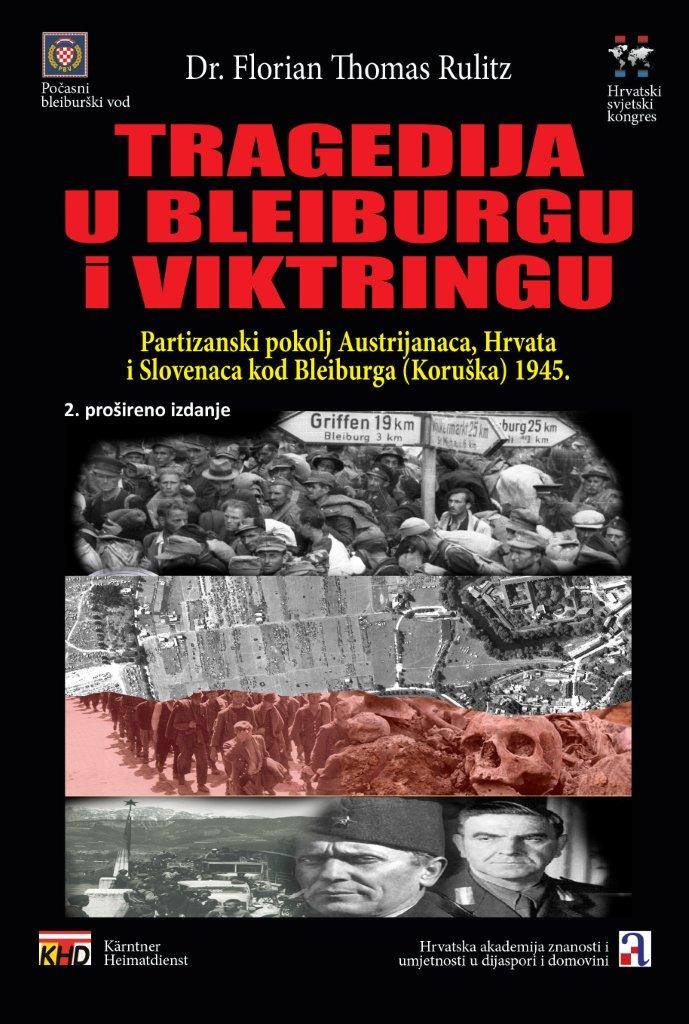
Since Jasenovac was not known as a place of execution until the 1970s, when the number of Jasenovac victims began to be inflated and continues so to this day, some kind of cause-and-effect relationship is out of the question. In my collection, I have dozens of foreign books from the post-war period and thousands of documents from the Second World War era, which I have at least flipped through. I can’t remember that I would find a mention of Jasenovac anywhere. Therefore, before any value judgment or comparisons are done, Jasenovac would first have to be thoroughly investigated, what really happened there and how many victims there were in which period. On the other hand, according to all available documents and witness statements, the massacres in Bleiburg and those on the Way of the Cross were perpetrated in order to destroy the biological potential of the Croatian people, in which, unfortunately, the communists largely succeeded. Austrian historian Florian Rulitz in his capital work “Tragedy in Bleiburg and Viktring”, which should be in every Croatian home, provides numerous evidential material that show it was a “special operation”, led by Serbian troops from eastern Bosnia, composed of retrained Chetniks. He thus quotes the Slovenian operative of the Yugoslav security agency for the protection of the people, OZNA, Zdenko Zavadlav, who states in remembering that the Slovenian OZNA operatives were appalled by the barbarism of the Serbian partisans. In this sense, connecting Jasenovac and Bleiburg is a pure construction, to justify crimes against Croats. By the way, Josip Broz Tito’s partisans treated the anti-communist Slovenians in a similar way, even though there were no Jasenovacs there.
The British embargo on documents about the events of 1945 at Bleiburg meant that they were sealed for 75 years, until 2020. Tell us if anything new has been learned about the crime in the past four years?
As far as I know, the archives are still closed, relevant documents not fully declassified. The British authorities know very well why. There are many testimonies of British officers, which support the suspicion that refugees from Croatia were sent to persecution and death on orders from “above”. I have spoken with several lawyers who believe that the actions by the British military and civilian authorities in Carinthia in the spring of 1945 contain many elements that could be used as evidence in a possible lawsuit against the United Kingdom for the genocide by the Republic of Croatia before the International Court of Justice in The Hague. Of course, before any lawsuit, the victims would have to be counted at least.
When did you learn about the concept of Bleiburg, and when did you start investigating that crime. Can you tell us what it was like before 1990 to explore Bleiburg or to talk about it in public?
I grew up in Modrica, in Posavina, in the time (as it would later become clear) of the strictest communism. I spent a lot of time in the village of Kornica, where my parents came from. There I noticed many widows, women in black, but I did not attach any meaning to it. Later I would find out that in that village, where there was actually no war, only one in three adult men survived the month of May 1945, hence so many widows. My grandfathers were indescribably lucky, at that time they were ill with typhus, so as such they were not interesting to the communist “liberators”. I gained further knowledge, including Bleiburg and the Way of the Cross, later, as a student in Zagreb. When I went to Austria for my doctoral studies, I naturally gained a much broader picture of the character of the Yugoslav communist system, and I did not miss any opportunity to testify about it, especially during the Homeland War. At that time, the suffering of the Croats in Yugoslavia had fallen into the background, but the topic was brought up again 12 years ago, when the government of Zoran Milanovic cancelled the parliamentary sponsorship of the commemoration at Bleiburg. This ignited the propaganda terror over the Croatian people’s memory of their victims, which unfortunately continues to this day. Everyone except Croats can mourn their victims! Within the framework of my modest possibilities, I oppose this and surprisingly I have a lot of success. Strangers believe me or at least start to critically check the information they have received from the other party. The rule that facts are the best defence and protection is confirmed. Nowadays, no one should hesitate to testify about what his/her relatives experienced in that criminal system or regime.
Which testimony of the survivors stuck to your memory the most?
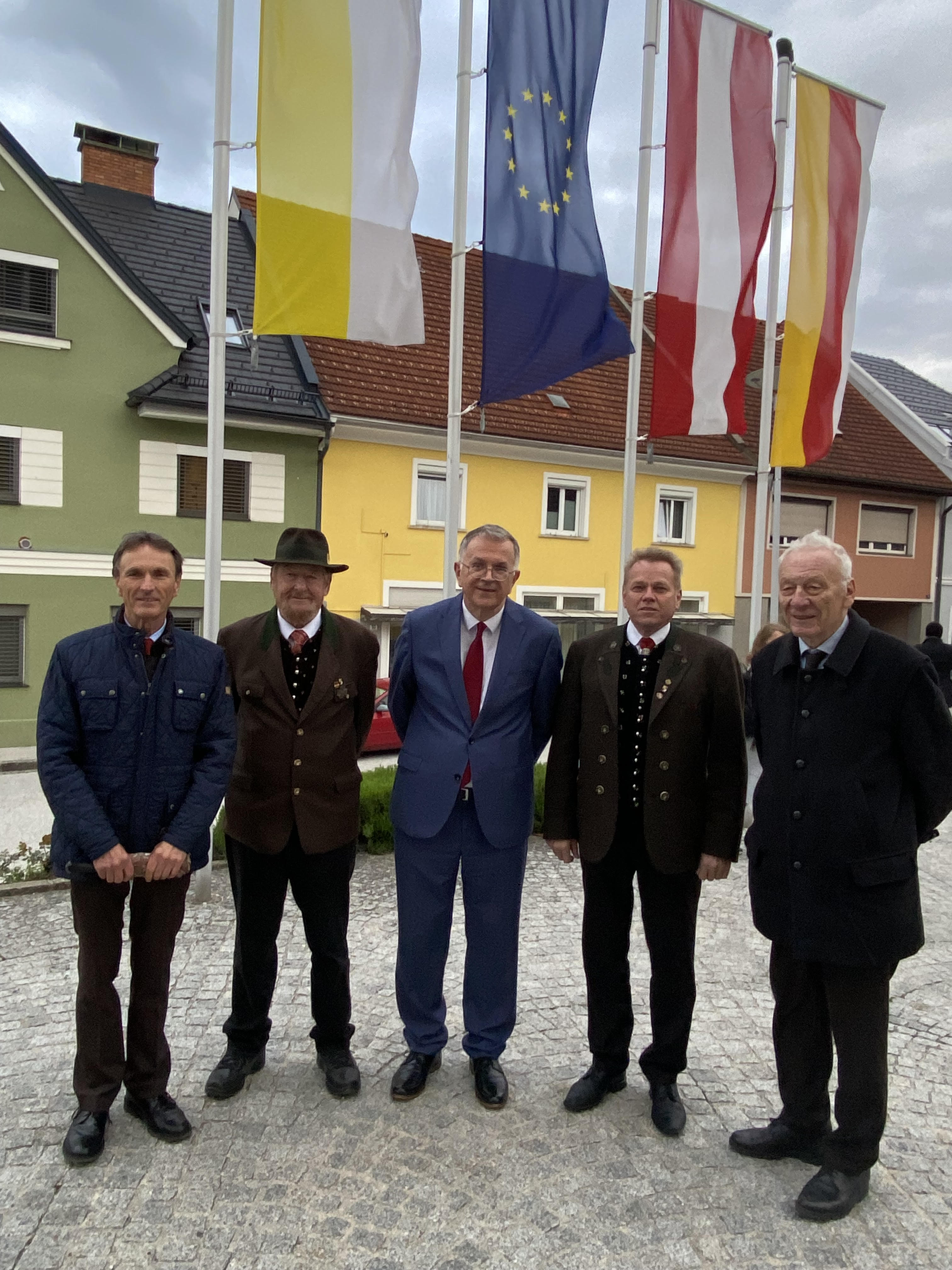
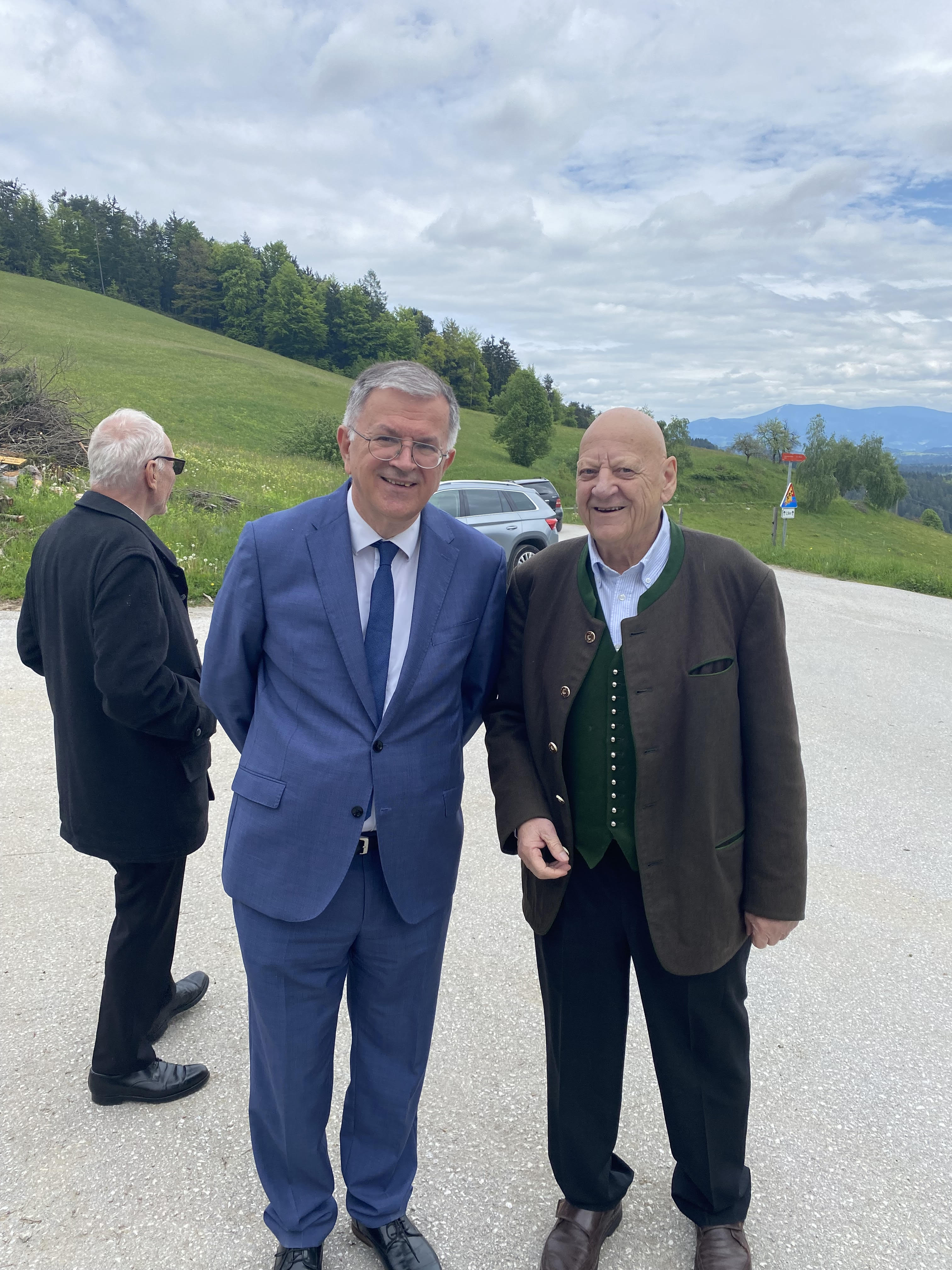
The first thing that comes to mind is the testimony of Zvonimir Zoric, especially with regards to the dirty game the British commanders played in Bleiburg. Then the spectacular life story of Nikola Hermann, the honorary consul of the Republic of Croatia in Graz, who was in Bleiburg as a boy. However, I have always been interested in what eyewitnesses from the other side have to say about these events. The most important are Johann Neubersch and Maria Leitgeb, whose testimonies can be found on YouTube. They described in detail the atrocities committed by Serbian partisans, retrained Chetniks from eastern Bosnia, against Croatian refugees. Such barbarism clearly shows that there was no revenge involved, but the planned extermination of the Croats. Valentin Leitgeb, Maria’s son, together with Franz Jordan and the family of the pharmacist Gunzer are among those Austrians who tend to and take care of the Croatian graves in southern Austria. That’s how I became friends with them. With Jordan, whose father-in-law was a Croatian refugee, I addressed the Austrian institutions, so that no one can say that “they was not informed”. Although it is a thorn in the side of many, the Croatian commemoration in Bleiburg is neither prohibited, nor can it be prohibited. It is a fundamental human right that should be practiced in an appropriate way.
Can anyone who highlights or commemorates this tragedy be said to be a nationalist, which is another form of silencing those who speak the truth?
The term “nationalist” has been notorious since communist times and is used as a synonym for chauvinism, hatred towards members of other nations. In this sense, just declaring oneself as a Croat, and especially of the Catholic faith, was a reason for suspicion and stigma, which cost some of my peers prison. I somehow managed to pull through, I don’t even know how, although there were people around me – as it would later become evident – who, unbeknown to me, worked for the Yugoslav Secret Police UDBA. Simplified: if the Serbs are not in power, then they claim endangerment, and that the main culprits for this are the Croats. All this propaganda poison is generated in Belgrade and shipped to Zagreb or through Zagreb to Western countries. Recently, a well-known journalist in Germany openly admitted that he was deceived about the so-called “Ustasha coat of arms”. I myself have been the subject of attacks many times. Some time ago, a high-ranking Croatian government official advised my foreign friend to stay away from me. I was told that the candidate in question is a person who wanted to be an Ambassador in Belgrade, so while preparing for that role he engaged in the “hunt for Ustashas”. The Slovenian Olga Voglauer, a representative of the Greens in the Austrian parliament, made sure that the farce was complete. Although she vacations in Croatia every year, she is the ringleader of the anti-Croatian hunt in Austria.
What should be done to enable justice to speak?
In the ideal case, which unfortunately we have not yet experienced in the 33 years of Croatian statehood, the government, primarily the Government of the Republic of Croatia, would take care of this. One email or telephone conversation between the Prime Minister of the Republic of Croatia and Vienna would remove the problem as if it never existed. The Austrian Government should be asked only one question: What right or regulation is violated, if the Croats in Bleiburg commemorate their dead?
Remembrance of the deceased is one of the basic human rights and state obligations, which the current government unfortunately does not fulfill.
How do you comment, to put it mildly, on the distancing of official Austria and the church circles there from the Holy Mass and the accompanying remembrance program at Bleiburg for the memory of the victims of the communist regime? This especially concerns the Diocese of Klagenfurt-Gurk, its clergy and politicians in Austria?
First of all, the accusations of a nationalist or fascist gathering in Bleiburg are completely unfounded. I have been participating in the commemoration for years and I have not noticed any difference compared to similar celebrations in Croatia. The Catholic Church in Austria has been rocked by a series of scandals, and as such is susceptible to political influences. Therefore, I return to the previous question: Taking care of the unhindered commemoration of Croatian victims abroad, not only in Austria but, for example, in Ukraine, belongs to the tasks of the Government of the Republic of Croatia, which, as a member of the European Union and the Council of Europe, has numerous instruments at its disposal to implement this. The church is only an executor here.
Croatia, it seems, has achieved its national goals, is part of Europe and all integrations, while in Bosnia and Herzegovina Croats have other existential problems and the threat of disappearance… In the spirit of the first question, what will Bleiburg be to Croats in the future?
I don’t agree with that. It is true that Croatia has achieved a lot, but many achievements are only at the declarative level and lack substance, for example the premature introduction of the euro. The picture of the unfinished State is best demonstrated by the lack of concern of the Republic of Croatia for the Croats in the neighbouring countries of the former Yugoslavia, especially in Bosnia and Herzegovina. Imagine, Croatia has already been in the European Union for 11 years, and in the candidate country (Bosnia and Herzegovina) for EU membership, where Croats are a constituent nation, Croats are denied the constitutionally guaranteed right to their own language, there is not even a State TV program in the Croatian language, and even the placing of a cross on private land is disputed, as shown by the recent case in Novi Travnik.
I believe, however, that the situation will improve and that Bleiburg will get its rightful place in the public space. If the Republic of Croatia were to fulfill the civilisational minimum and build a memorial centre in Bleiburg, I am convinced that it would be well attended.
Interviewin te English language by Ina Vukic


 Croatia, the War, and the Future
Leave a comment