As Bosnia and Herzegovina prepares for its general elections on Sunday, 4 October 2026, few issues remain as politically sensitive for the country’s Croats as the question of who, in practical terms, has the right to elect the Croat member of the three-member Presidency.
For years, Croat political representatives and organisations have argued that Bosnia and Herzegovina’s electoral legislation places Croats at a disadvantage because they are considerably less numerous than Bosniaks within the Federation of Bosnia and Herzegovina, the entity from which both the Bosniak and Croat members of the state Presidency are elected.
At the centre of that controversy has been the outgoing Croat member of the Presidency, Željko Komšić. Although elected to the position designated for a Croat, Komšić has repeatedly been rejected by the principal Croat political parties, which argue that his electoral victories depended substantially on votes from Bosniak voters rather than on support from the Croat electorate.
Komšić and his Democratic Front (DF), by contrast, advocate a more civic model of political representation and challenge the principle that members of the Presidency should politically represent only the ethnic constituency from which they are designated.
It is this fundamental disagreement – between civic representation based primarily on individual citizenship and a constitutional system built around Bosnia and Herzegovina’s three constituent peoples – that once again forms an important backdrop to the 2026 elections.
For many Croats, therefore, 4 October represents more than another election. It is another test of whether they can elect a President who a substantial part of the Croat electorate regards as its legitimate political representative.
Three Candidates for the Croat Presidency Seat
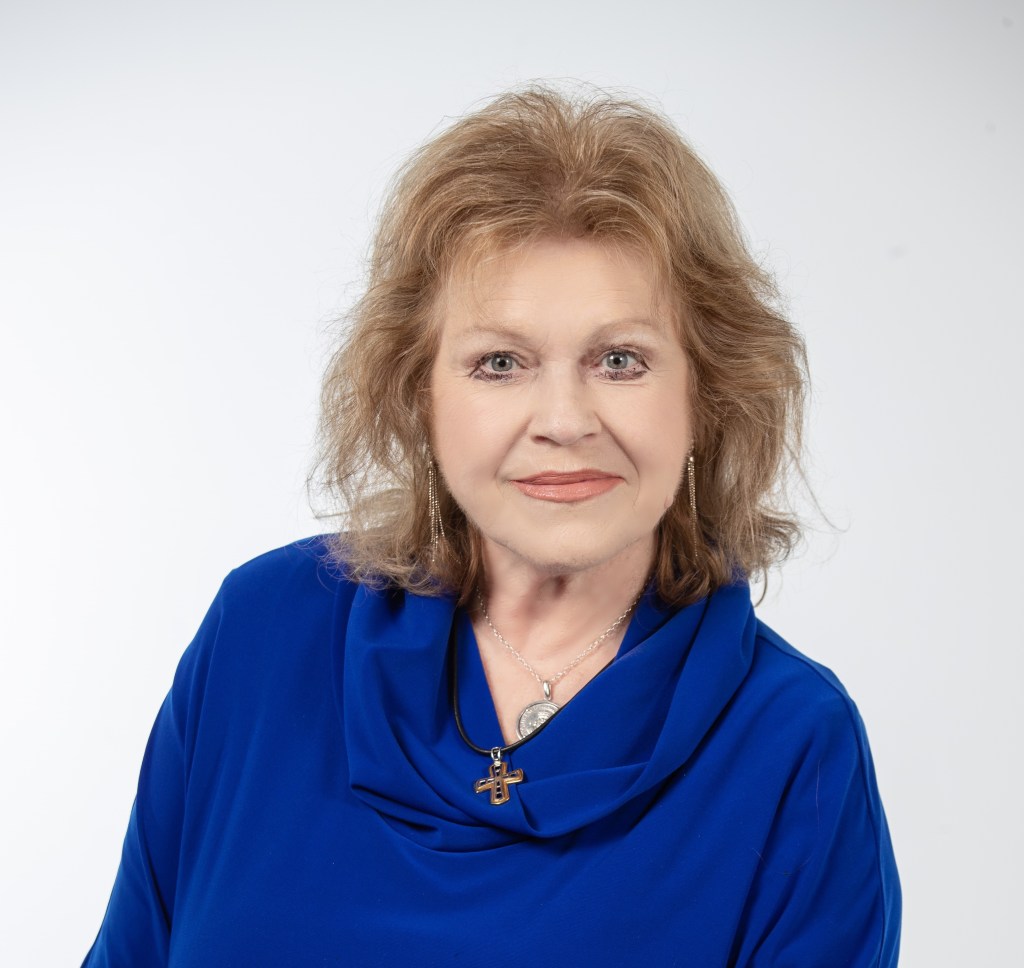
Within the Croat political sphere, the Croatian Democratic Union of Bosnia and Herzegovina (HDZ BiH), led by Dragan Čović, remains the principal political force. For the 2026 election, HDZ BiH has nominated Darijana Filipović for the Croat seat on the Presidency.
The Central Election Commission has confirmed three candidates for that seat: Filipović for HDZ BiH, independent candidate Zdenko Lučić, who is backed by a coalition of Croat opposition parties, and Slaven Kovačević of the Democratic Front.
Komšić himself is not standing again after serving two consecutive terms beginning in 2018.
The choice confronting Croat voters consequently reflects competing political visions as well as competition between candidates. HDZ BiH continues to campaign for changes to the electoral system that it says would guarantee the “legitimate representation” of the constituent peoples. The Democratic Front advocates a more civic conception of Bosnia and Herzegovina, while Lučić offers an alternative to both HDZ BiH and the DF.
These competing positions go to the heart of an unresolved question that has troubled Bosnia and Herzegovina for years: how can the country reconcile the equality of individual citizens with the constitutional rights of its three constituent peoples?
A Complex Electoral System
Around 3.4 million registered voters are eligible to participate in the 2026 general elections. According to the Central Election Commission, 3,414,364 voters were recorded on the Central Voters’ Register when it was closed on 6 May 2026.
They will vote within one of the most complex political systems in Europe.
That system derives largely from the constitutional arrangements established under the 1995 Dayton Peace Agreement, which ended the 1992–1995 war and structured Bosnia and Herzegovina around power-sharing among three constituent peoples – Bosniaks, Croats and Serbs – as well as between different levels of government.
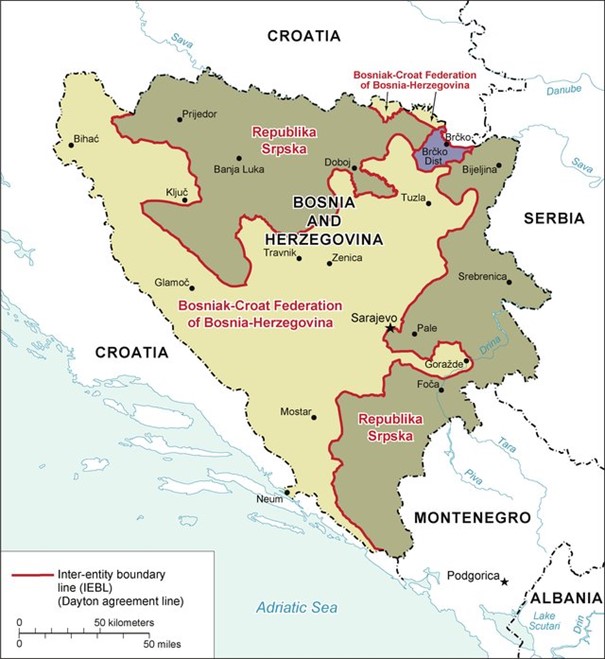
Bosnia and Herzegovina consists principally of two entities: the Federation of Bosnia and Herzegovina, predominantly populated by Bosniaks and Croats, and Republika Srpska, predominantly populated by Serbs. The Brčko District operates separately as a self-governing administrative district under the sovereignty of Bosnia and Herzegovina.
What voters elect depends partly on where they live.
At the state level, the most prominent contest is for the three-member Presidency of Bosnia and Herzegovina. One Bosniak and one Croat member are elected directly from the territory of the Federation, while one Serb member is elected directly from Republika Srpska.
It is precisely this arrangement that lies at the centre of the long-running dispute over Croat representation. Voters in the Federation may vote for either the Bosniak or Croat candidate regardless of their own ethnicity. Because Bosniaks greatly outnumber Croats in the Federation, Croat parties have long argued that this makes it possible for voters outside the Croat electorate to determine who occupies the Presidency seat designated for a Croat.
At the same time, critics of proposals for stronger ethnic electoral mechanisms argue that further entrenching ethnic divisions would move Bosnia and Herzegovina away from a citizenship-based democratic system.
That unresolved tension remains one of the defining constitutional questions facing the country.
Parliament and Entity Elections
Alongside the Presidency, voters will elect the House of Representatives of the Parliamentary Assembly of Bosnia and Herzegovina, the lower chamber of the state legislature. It consists of 42 members, with 28 elected from the Federation and 14 from Republika Srpska.
The upper chamber, the House of Peoples, consists of 15 delegates – five Bosniaks, five Croats and five Serbs – who are selected indirectly through the entity-level institutions.
Within the Federation of Bosnia and Herzegovina, voters will also elect the 98 members of the House of Representatives of the Federation Parliament. They will additionally elect representatives to the assemblies of the Federation’s ten cantons.
The Federation’s House of Peoples, meanwhile, consists of 80 delegates: 23 Bosniaks, 23 Croats, 23 Serbs and 11 representatives classified as Others. These delegates are elected indirectly through the cantonal legislatures.
In Republika Srpska, voters directly elect the entity president and two vice-presidents, as well as members of the National Assembly of Republika Srpska.
The Central Election Commission has formally called direct elections for the state Presidency, the state House of Representatives, the Federation House of Representatives, the Republika Srpska National Assembly, the president and vice-presidents of Republika Srpska and the ten cantonal assemblies in the Federation.
The result is an extraordinarily layered electoral structure in which state, entity, cantonal and ethnic representation overlap.
A Country Still Divided Over Its Political Future
The 2026 election campaign has unfolded amid ongoing political fragmentation, constitutional disputes, economic concerns, and disagreement over Bosnia and Herzegovina’s future political structure.
The country also continues to face the challenge of advancing reforms connected with its aspirations for European Union membership. Political deadlock, disagreements over the powers of state institutions and disputes surrounding the constitutional position of the constituent peoples have repeatedly complicated that process.
In Republika Srpska, the SNSD has continued to challenge aspects of state-level authority and the role of the Office of the High Representative, while opposition parties have focused heavily on governance, economic conditions, institutional performance and corruption.
Within the Federation, the political struggle is equally intense.
The Party of Democratic Action (SDA) has criticised the governing “Trojka” parties over their political agreements with Serb and Croat parties. The governing parties, for their part, have emphasised institutional reform, international cooperation and efforts to move the country towards closer European integration.
HDZ BiH has again placed electoral reform and the constitutional position of Croats near the centre of its campaign.
For Croat political parties, the argument is not merely about winning another seat. It concerns the meaning of Bosnia and Herzegovina’s constitutional description of Bosniaks, Croats and Serbs as constituent peoples and whether that principle can be translated into an electoral system in which each community has an effective role in choosing those who occupy offices designated for it.
Opponents of that approach see the matter differently. They argue that Bosnia and Herzegovina must gradually move beyond institutional structures based primarily on ethnicity and towards a system in which individual citizens possess equal political rights regardless of national identification.
More than three decades after Dayton, those competing principles remain difficult to reconcile.
New Technology Faces Its First Major Test
Another important feature of the 2026 elections is the introduction of new election technology intended to strengthen confidence in the integrity of the voting process.
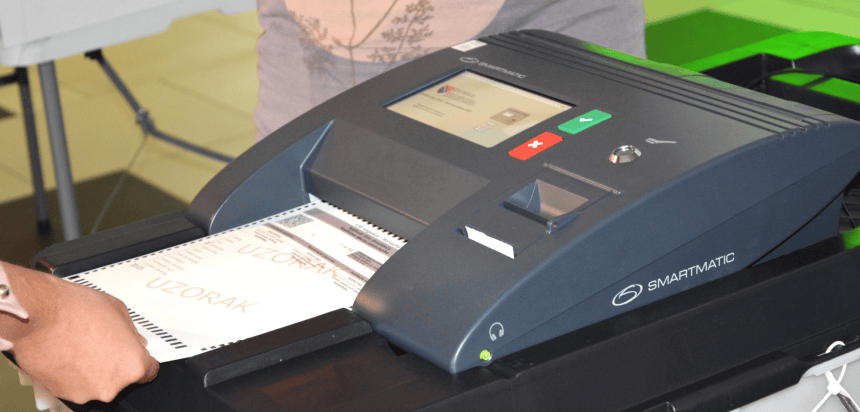
The Central Election Commission initiated procurement for a nationwide system involving biometric voter identification and ballot-paper scanning. The project envisaged approximately 6,000 voter-verification devices and 6,000 ballot scanners, including reserve equipment.
The technology is intended to make voter identification more secure, reduce opportunities for irregularities and improve the accuracy and transparency of vote counting.
Its implementation will therefore be closely watched on election day. For a country in which election results and electoral procedures are frequently subjected to intense political scrutiny, confidence in the voting and counting process will be particularly important.
The reforms were developed during the tenure of former High Representative Christian Schmidt, who had used the powers of his office to introduce significant amendments to Bosnia and Herzegovina’s electoral framework. Schmidt announced in May 2026 that he would conclude his mandate, after almost five years in the position.
For Croats, the Question of Representation Remains
For Bosnia and Herzegovina’s Croats, however, the most immediate question on 4 October will remain the one that has dominated their political debate for years: who will occupy the Croat seat in the Presidency, and from where will that person derive their democratic legitimacy?
The dispute surrounding Željko Komšić did not create the underlying constitutional problem, nor will his departure from the Presidency necessarily resolve it.
Rather, it exposed a fundamental disagreement about the nature of Bosnia and Herzegovina itself.
Is it primarily a matter for individual citizens, in which every voter should be free to influence every office available within their electoral territory? Or is it also, as the Dayton constitutional structure provides, a state composed around three constituent peoples whose collective political equality requires safeguards against one more numerous group determining the representatives of another?
The 2026 election cannot by itself settle that debate.
But for Croats who have long argued that their smaller numbers leave them vulnerable to electoral domination within the Federation, this election carries particular significance. Many will approach the ballot box hoping that the person elected as the Croat member of the Presidency will command demonstrable support among Croat voters themselves.
Whatever the outcome on 4 October, the broader challenge will remain after the ballots are counted: finding a constitutional and electoral arrangement capable of protecting the collective rights of Bosnia and Herzegovina’s constituent peoples while also meeting democratic standards of equality for individual citizens.
Thirty-one years after the Dayton Peace Agreement ended the war, Bosnia and Herzegovina is still wrestling with that difficult balance.
And for the country’s Croats, the 2026 general elections will provide another important measure of whether the existing political system can deliver the representation they have been demanding for years. Ina Vukic





Leave a Reply