

Montenegro’s ambition to become the European Union’s 28th member state by 2028 hangs in the balance as unresolved disputes with Croatia threaten to derail its accession negotiations. At the heart of these disagreements lie questions that extend far beyond conventional bilateral relations: accountability for wartime aggression, justice for victims, the fate of missing persons, and the enduring obligation to address the consequences of the wars that accompanied the violent disintegration of communist Yugoslavia.
In late September 2026, Brussels was compelled to postpone a planned intergovernmental conference with Montenegro, widely regarded as the frontrunner among EU membership candidates, after Croatia reiterated its opposition to closing several negotiating chapters until outstanding issues were adequately addressed.
By that stage, Montenegro had provisionally closed 18 negotiating chapters and was aiming to complete the necessary work on the remaining 15 by the end of September, leaving the final decisions to EU member states. By 14 October 2026, it had succeeded in closing 21 of the 33 chapters. Nevertheless, Croatia’s continued objections demonstrated that technical progress towards EU membership cannot be divorced from unresolved historical injustices and obligations arising from wartime aggression.
The disputes between Zagreb and Podgorica are neither trivial nor newly discovered. They concern matters of profound historical, legal and moral significance, particularly Montenegro’s participation alongside Serbia in the aggression against Croatia during the early 1990s.
Among Croatia’s principal demands are compensation for survivors of the notorious Morinj detention camp, where approximately 300 Croatians were imprisoned between October 1991 and August 1992, following the occupation of parts of the Dubrovnik region by Serbian and Montenegrin forces. Croatia is also seeking meaningful cooperation in locating persons who remain missing from its Homeland War, prosecuting outstanding war crimes, resolving contested border issues, and settling long-standing property claims by Croatian families in Montenegro.
Further demands include the preservation and permanent display of a memorial plaque at the former Morinj detention camp, as well as the renaming of a municipal swimming pool in Kotor dedicated to Zoran Gopčević, a former international water polo player who, according to Croatia’s document of demands, served as a guard at Morinj during 1991 and 1992.
These are not merely symbolic demands. They concern the dignity of victims, the recognition of historical responsibility and the fundamental principle that those who suffered persecution, imprisonment, dispossession and other wartime abuses must not be forgotten in the pursuit of political convenience.
It is worth recalling that Montenegro participated alongside Serbia in the military aggression against Croatia during the 1990s, although it did not formally become an independent state until 2006. Its subsequent emergence as a sovereign nation does not erase the historical record or the responsibility to confront the consequences of that period.
Ministerial-level discussions between Croatia and Montenegro have continued in recent weeks, with support from the European Commission. However, the absence of meaningful progress prompted Zagreb to block the provisional closure of Chapter 14, concerning transport policy, at a technical meeting on 22 September.
Croatia has also maintained objections to the closure of chapters concerning foreign and security policy, judiciary and fundamental rights, and justice, freedom and security.
These objections have become particularly significant as Montenegro approaches what it hopes will be the final stages of its accession negotiations.
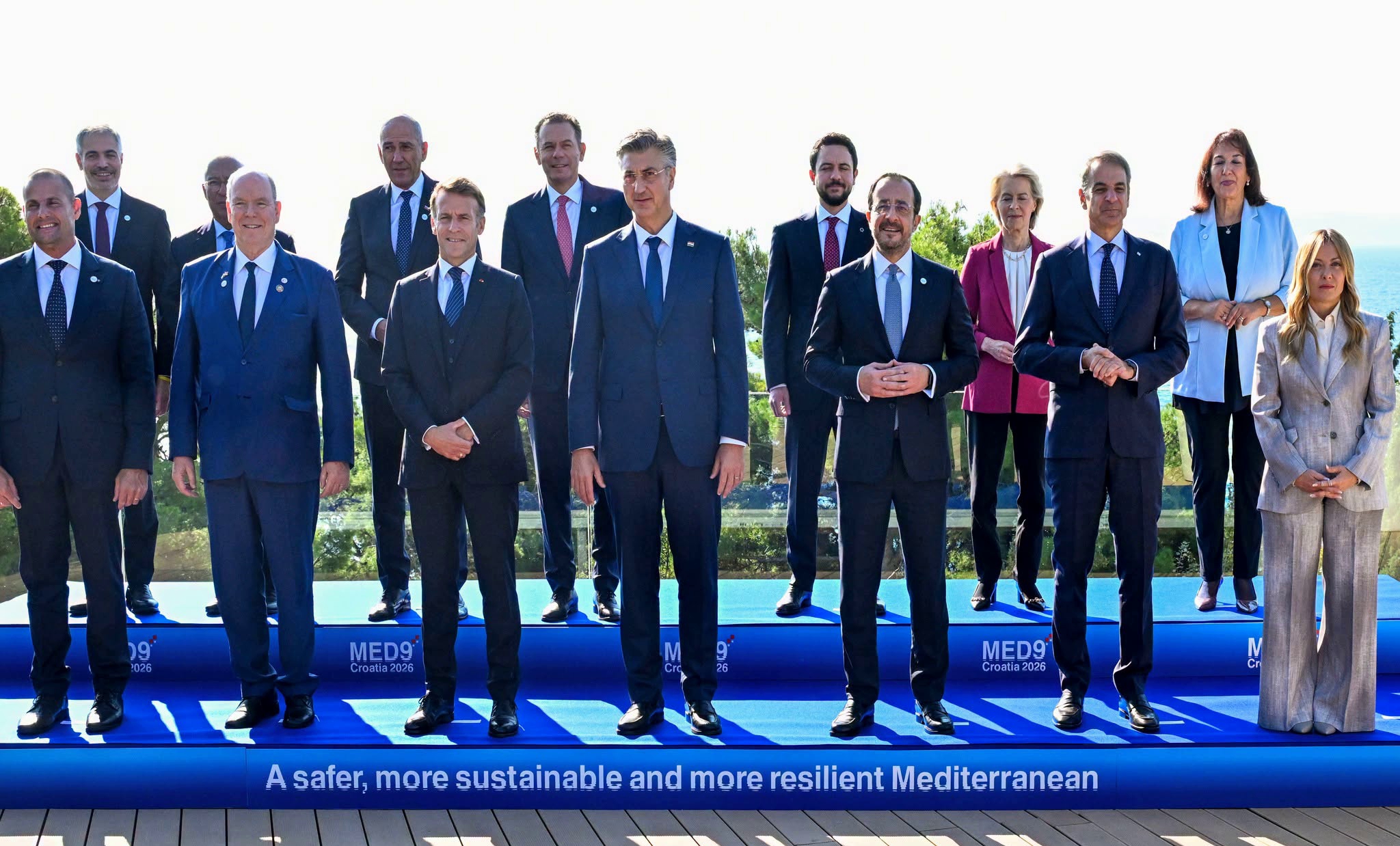
During the European Council summit in Brussels on 15–16 October, Croatian Prime Minister Andrej Plenković outlined more explicitly the conditions Montenegro must satisfy before Croatia will consent to its accession.
According to diplomatic accounts reported by Radio Free Europe/Radio Liberty, representatives of several EU member states privately expressed frustration with Zagreb’s position, describing it as “unhelpful” and arriving at the “eleventh hour”. Many European governments are eager to bring Montenegro into the Union, particularly at a time when enlargement is increasingly viewed through the prism of geopolitical security, which, for the EU, may include growing tensions with Russia.
Yet the response among EU leaders appeared considerably more measured. Plenković was reportedly praised for clearly articulating Croatia’s concerns and encountered little direct opposition during the summit discussions.
The European Council’s final conclusions reflected this cautious approach. Rather than offering an unequivocal endorsement of Montenegro’s accelerated accession, the Council noted the Irish Council Presidency’s intention to work towards the provisional closure of the remaining negotiating chapters, subject to Montenegro’s implementation of the necessary reforms.
The language was significant. It placed responsibility squarely upon Podgorica to demonstrate that it could meet the obligations expected of a future EU member state.
Plenković reinforced this position after the first day of the summit, stressing that Croatia remained committed to European enlargement but that aspiring members must fulfil the required conditions.
“We amended the conclusions at our initiative, sending a realistic message to our colleagues in Montenegro that they should get down to talks with Croatia,” he told Politico.
He also expressed frustration at the lack of progress on issues that had remained unresolved for years.
“Some (unresolved issues) have been on the agenda for the last two years [with] no progress whatsoever,” he said, urging Montenegro to take meaningful steps towards a settlement.
“We will ask our colleagues to help them to make progress, if there’s an objective to conclude the negotiations.”
Despite ongoing disagreements, Croatia has previously consented to Montenegro’s progress through several stages of Montenegro’s accession process. Zagreb’s present position, therefore, should not automatically be interpreted as opposition to Montenegro joining the European Union. Rather, it reflects an insistence that enlargement must be accompanied by accountability and respect for the rights of those who suffered during the aggression against Croatia.
Reports that governments including Germany, France and Luxembourg have engaged with Zagreb in an effort to facilitate the resolution of these disputes raise an important question: Is the European Union prepared to uphold the principles of justice and accountability upon which it claims to be founded, even when doing so complicates its geopolitical ambitions?
Montenegro’s accession aspirations unfold against a wider strategic backdrop. As tensions with Russia persist, Brussels increasingly regards enlargement as a means of strengthening European security, consolidating Western influence and anchoring neighbouring states within the Union’s political and institutional framework.
From that perspective, Montenegro’s membership carries obvious strategic advantages. Its admission would signal continued momentum in the integration of the Western Balkans and reinforce the European Union’s influence in a region that remains vulnerable to competing geopolitical interests.
However, geopolitical expediency must never become an excuse for overlooking unresolved war crimes, disregarding victims or diminishing the obligations arising from acts of aggression.
The European Union cannot credibly champion human rights, the rule of law and reconciliation while simultaneously treating demands for justice as inconvenient obstacles to enlargement.
Justice for victims of aggression is not a bilateral inconvenience. It is a universal obligation.
This distinction is fundamental.
The protection of victims of armed conflict, the investigation and prosecution of war crimes, and the provision of effective remedies for serious human rights violations are recognised principles of international law and international human rights standards. Questions of state responsibility for internationally wrongful acts, including aggression, further demonstrate that the consequences of war cannot simply be relegated to the past because political circumstances have changed.
Indeed, viewing aggression through the framework of state responsibility offers an important means of addressing its broader consequences. It enables governments and international institutions to adopt an approach grounded not merely in diplomatic accommodation but in the rights of individuals and communities who continue to bear the scars of war.
Such an approach recognises that reconciliation cannot be genuine when the suffering of victims is minimised, when the fate of missing persons remains unresolved, or when historical accountability is sacrificed for the sake of political timetables.
For Croatian families still searching for loved ones who disappeared during the Homeland War, these are not abstract diplomatic questions. They are deeply personal wounds that have remained open for more than three decades.
For former prisoners of Morinj, the demand for compensation and recognition is not an exercise in political obstruction. It is a demand that their suffering be acknowledged and that those responsible for abuses be held accountable.
For families whose property claims remain unresolved, justice requires more than expressions of goodwill. It requires tangible action.
And for Croatia, whose people endured military aggression, occupation, destruction, displacement and the loss of thousands of lives in the struggle for independence, the insistence upon accountability is neither unreasonable nor incompatible with the European project.
On the contrary, it is entirely consistent with the values the European Union professes to uphold.
The argument that Croatia should set aside these concerns in order to accelerate Montenegro’s accession risks establishing a troubling precedent: that the obligations arising from wartime aggression may be subordinated to political priorities whenever powerful European governments consider it expedient.
Such a precedent would weaken, rather than strengthen, the moral authority of the European Union.
It would also send a deeply discouraging message to victims of aggression elsewhere in the world, suggesting that justice becomes negotiable when geopolitical interests intervene.
The European Union’s enlargement process must therefore remain more than a bureaucratic exercise in closing negotiating chapters. It must also serve as a meaningful test of whether candidate countries are prepared to confront difficult aspects of their past, honour their international obligations and demonstrate genuine commitment to the principles of justice, human rights and the rule of law.
Montenegro has every right to pursue membership of the European Union. Its citizens deserve the opportunities, stability and prosperity that such membership may bring. But those aspirations must be accompanied by a willingness to address unresolved historical responsibilities, particularly where the rights and dignity of victims remain at stake.
Croatia’s position should not be dismissed as an attempt to exploit its EU membership to settle bilateral scores. Nor should its demands be portrayed as merely internal disagreements between neighbouring states.
The issues at stake transcend national borders.
They concern the responsibilities of states following armed aggression, the protection of victims, the pursuit of accountability for war crimes and the indispensable relationship between justice and lasting reconciliation.
If the European Union is serious about building a community founded upon shared values, it must recognise that genuine reconciliation cannot be achieved by pressuring victims or their representatives to abandon legitimate claims for justice.
Nor can the passage of time alone extinguish the moral obligation to confront the consequences of aggression.
Prime Minister Andrej Plenković’s insistence that Montenegro address Croatia’s outstanding concerns before completing its accession negotiations should therefore be understood within this broader framework of justice and accountability.
The question is not whether Montenegro should eventually become the European Union’s 28th member state. The question is whether its admission will strengthen the Union’s commitment to the principles it espouses or demonstrate that those principles can be compromised when political circumstances demand a faster result.
A European Union that places geopolitical convenience above justice for victims of aggression risks undermining the very values that give its enlargement project legitimacy.
Montenegro’s path to European Union membership should remain open, but it must pass through meaningful accountability, respect for victims and a sincere commitment to resolving the consequences of its wartime past.
Only then can enlargement contribute not merely to the expansion of Europe’s borders, but to the advancement of lasting peace, justice and genuine reconciliation. Ina Vukic






Leave a Reply