
As I peered a while back through the bus window towards the Adriatic coast, the tall, pine-covered mountains of my native island of Korčula stretched across the horizon. Below, numerous sailboats bobbed and swayed under the force of the bura, that tenacious north-easterly wind said to clear the humidity and purify the sea.
Along the Dalmatian coast, the bura is far more than a force of nature. It assists in the slow drying of Croatian pršut (prosciutto) and carries sea salt onto the island of Pag’s herb-covered sheep pastures, contributing to the distinctive character and crystalline texture of the protected Paški sir cheese.
The bura also sweeps across the Pelješac Peninsula, a celebrated Croatian wine region that might remind many Australians of the Hunter Valley. Its sun-drenched vineyards produce the red grapes behind some of Croatia’s renowned wines, including Plavac Mali and the celebrated appellations of Postup and Dingač.
At the peninsula’s gateway sits the historic town of Orebić.
Nicknamed the “cradle of sea captains”, Orebić enjoyed centuries of prominence as a maritime centre, producing accomplished sailors, prosperous sea captains and shipowners. Its maritime tradition once placed it among important European seafaring centres. Local stories recall that when ships sailed through the Pelješac Channel, residents would wave towels and sheets from their windows while the Franciscans sounded the monastery bells high above the town in welcome.
With its crystal-clear waters, spectacular coastline, unspoilt landscapes and more than a thousand islands, islets and reefs, it is little wonder that Croatia has become one of the world’s great nautical tourism destinations. In recent years, Croatia has consistently ranked among the leading destinations for yacht charter holidays, with a substantial proportion of the world’s charter fleet operating along its coast.
And yet, for all the beauty and popularity of sailing the Croatian Adriatic, finding everything a sailor needs while navigating it has not always been simple.

That is where two Croatian-Australian sisters, Valentina Čorak and Martina Boljkovac, née Jurjević, have stepped in.
Martina was born in Croatia and, when she was just over eleven months old, migrated to Australia in 1987 with her parents, Frano Jurjević and Marijana Milena Jurjević Galešić. The family settled in Canberra, where Frano and Marijana had two more children, Valentina and Stipe.
Australia became their home and the place where the children grew up and built their lives and careers. Yet Croatia remained deeply embedded within the family.
Then came a decision familiar to many in the Croatian diaspora, although relatively few actually make it: the decision to return.
In 2022, Valentina and Martina cut short successful careers in Australia and joined their parents and brother in returning to Croatia.
Four years later, their return has produced an innovative business venture combining their professional experience with one of Croatia’s greatest natural and economic assets—the Adriatic Sea.
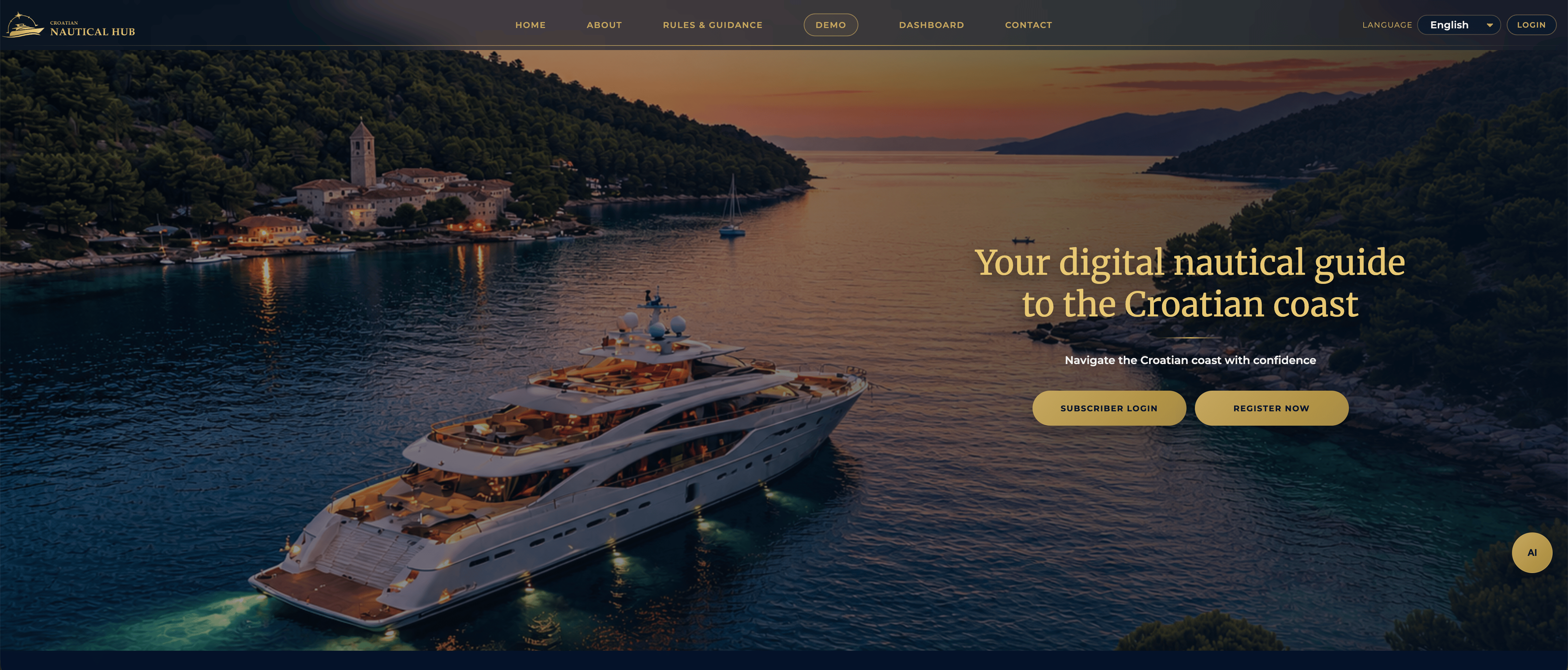
Valentina and Martina have launched the Croatian Nautical Hub, a multilingual digital platform designed to connect sailors and boaters with marinas, repair facilities, crew members and other nautical service providers along the Croatian coast.
Its purpose is refreshingly straightforward: make sailing in Croatia easier.
For yacht owners, captains, charter guests and other visitors travelling the Adriatic, locating reliable information about the services they need can consume valuable time and detract from the very experience they have come to Croatia to enjoy.
Until now, much of that information has been dispersed across numerous websites and individual service providers, sometimes difficult to locate and further complicated for foreign visitors by language barriers.
Croatian Nautical Hub brings that information together.
Instead of searching multiple sources for marinas, fuel stations, shipyards, repairs, maintenance, crew, concierge assistance and other services, sailors can use a single portal designed specifically around the practical realities of navigating the Croatian Adriatic.
For Croatian businesses, meanwhile, the platform offers something equally valuable: greater visibility and easier access to an international nautical clientele already travelling along their coastline.
“Croatian Nautical Hub was created to bring clarity, reliability, and elegance to the world of sailing along the Croatian coast,” Valentina and Martina explain in the portal’s About Us section. “We connect yacht owners, captains, charter guests, and marine professionals through one unified platform.”
Their ambition extends beyond providing practical information. They envisage a maritime community incorporating professional listings, regional knowledge, guides and recommendations that enrich the experience of travelling Croatia’s extraordinary coastline.
Importantly for an international audience, the portal is available in nine languages: Croatian, English, German, Italian, Polish, Russian, Slovenian, Hungarian and Czech.
There is something particularly satisfying to me about this story.
Two daughters of the Croatian diaspora, raised and professionally formed in Australia, returned to the country from which their family had emigrated decades earlier. Rather than simply returning to live there, they brought with them their accumulated knowledge, experience and entrepreneurial confidence and turned those qualities towards creating something new for Croatia.
Their story represents another dimension of the relationship between Croatia and its diaspora.
For generations, emigrants helped Croatia from abroad—politically, financially, culturally and, when the need arose, through humanitarian assistance. Today, a new generation has an opportunity to contribute differently: by returning with skills, ideas, international experience and entrepreneurial energy capable of creating businesses that connect Croatia more effectively with the world.
Croatian Nautical Hub is an example of precisely that.
For Croatia, the portal represents an innovative attempt to bring the fragmented practical world of Adriatic sailing into one accessible digital space. For international sailors, it offers something equally important: the possibility of spending less time searching for what they need and more time experiencing what brought them to Croatia in the first place.
The sea.
The islands.
The ports.
And, of course, that magnificent Croatian coastline—where the bura still whips across the water, sailboats rise and fall with its rhythm, and centuries of maritime tradition meet a distinctly modern Croatian idea. Ina Vukic








Leave a Reply