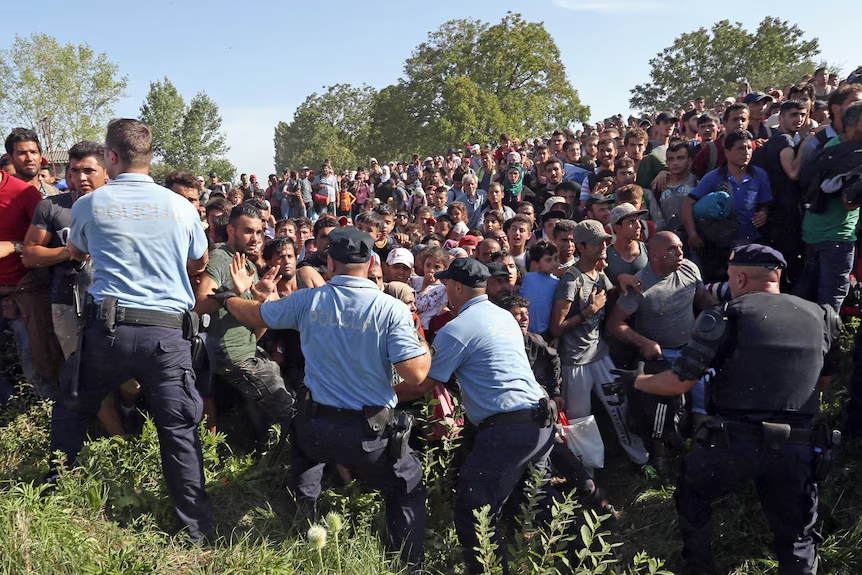
Croatia has once again been identified as one of the European Union member states facing significant migration challenges, placing it among six countries eligible to request a full or partial exemption from contributing to the EU’s migration solidarity mechanism in 2027.
The European Commission’s second Annual Report on Asylum and Migration, published on 6 November 2026, highlights the mounting pressures on Croatia’s migration and asylum systems, particularly those arising from irregular arrivals along the Western Balkan and Eastern Mediterranean migration routes.
The report assesses migration pressures across the European Union and identifies member states experiencing disproportionate challenges, whether through irregular border crossings, asylum applications, secondary movements of migrants, or the cumulative impact of migration over several years.
Croatia Among Six Countries Facing Significant Migration Challenges
According to the European Commission, Croatia, Bulgaria, Czechia, Estonia, Austria and Poland are experiencing significant migratory situations resulting from pressures accumulated over the past five years.
These pressures include sustained numbers of people receiving temporary protection, applications for international protection, difficulties within migrant return systems, and the substantial responsibilities associated with protecting the European Union’s external borders.
Croatia was placed in the same category last year, underscoring the persistent nature of the migration challenges the country faces.
Under the EU’s migration solidarity framework, these six member states may request a full or partial reduction in their contributions to the Solidarity Pool for 2027. Any such request would require approval from the Council of the European Union.
This provision recognises that certain member states, despite not necessarily experiencing the highest numbers of new arrivals at any given time, continue to shoulder considerable responsibilities due to their geographical position, border protection obligations, and accumulated migration pressures.
Croatia’s Strategic Position Intensifies Migration Pressures
As an EU member state situated along the Western Balkan migration route and responsible for protecting part of the Union’s external border, Croatia remains particularly vulnerable to fluctuations in irregular migration.
The European Commission warns that any substantial increase in irregular arrivals could place disproportionate additional demands on Croatia’s already strained migration and asylum systems.
Between 1 July 2025 and 30 June 2026, Croatia recorded 78 per cent of all irregular arrivals detected along the Western Balkan route.
According to the Commission, Croatia also recorded the second-highest number of irregular border crossings in the European Union, when measured relative to its population size and gross domestic product.
Furthermore, Croatia recorded the highest relative number of refusals of entry into the European Union, illustrating the considerable responsibilities its border authorities face in managing migration flows and enforcing EU entry requirements.
These figures highlight the particular challenges confronting countries situated on the Union’s external frontiers, where responsibility for border security and migration management frequently falls disproportionately on individual member states.
Four EU Countries Qualify for Solidarity Assistance
The European Commission has identified Cyprus, Greece, Italy and Spain as the four member states currently experiencing migration pressure sufficient to qualify for assistance under the EU’s solidarity mechanism.
These countries have faced disproportionate numbers of arrivals over the preceding year and are therefore eligible to receive support from other EU member states.
Under the solidarity arrangements, contributing countries may choose among several forms of assistance, including accepting asylum seekers or other eligible migrants transferred from member states under pressure, making financial contributions, or providing alternative operational and practical support.
The mechanism is intended to distribute responsibility more equitably across the European Union while ensuring that countries experiencing particularly intense migration pressures receive assistance.
However, the system also acknowledges that member states already carrying substantial migration-related burdens may require adjustments to their own solidarity obligations.
For Croatia, this distinction is particularly significant. Although the country is not included among the four principal beneficiaries of solidarity assistance for 2027, its classification as a member state facing a significant migratory situation provides a basis for seeking relief from its contribution obligations.
Sixteen Member States Identified as Being at Risk
In addition to identifying countries currently experiencing significant migration pressures, the European Commission has classified 16 member states as being at risk of migratory pressure in the coming year.
These are Belgium, Czechia, Germany, Estonia, Ireland, France, Croatia, Latvia, Lithuania, Luxembourg, the Netherlands, Poland, Romania, Slovenia and Finland.
Their inclusion reflects a combination of factors, including relatively high numbers of irregular arrivals, unauthorised secondary movements within the European Union, asylum applications, and the number of people receiving temporary protection, particularly those displaced by Russia’s war against Ukraine.
The Commission also identifies the potential instrumentalisation of migration—where migrants are deliberately used to exert political pressure or destabilise borders—as a factor that could create disproportionate obligations for certain member states.
Countries classified as being at risk will receive priority access to the EU’s Permanent Migration Support Toolbox, which provides assistance in addressing emerging migration challenges.
Their circumstances will also remain under review, with further assessments undertaken where necessary.
However, being classified as at risk does not automatically entitle a member state to seek a reduction in its solidarity contributions.
That possibility is specifically available to countries, including Croatia, identified as experiencing significant migration due to the cumulative pressures of the preceding five years.
Croatia’s inclusion in both categories therefore reflects the dual nature of its predicament: it is already managing substantial migration-related responsibilities while remaining vulnerable to further increases in irregular arrivals.
EU Solidarity Arrangements for 2027 Await Approval
The European Commission has also submitted its proposal for the EU’s 2027 solidarity arrangements, setting out the contributions expected from individual member states.
The proposal will remain confidential until formally adopted by the Council of the European Union, a decision anticipated before the end of 2026.
It will determine the extent to which member states must contribute towards supporting Cyprus, Greece, Italy and Spain, either through migrant relocations, financial payments or other approved forms of assistance.
For Croatia, the forthcoming decision will be particularly important, as it may determine whether the country can obtain a reduction in its solidarity obligations while continuing to manage substantial pressures along the EU’s external border.
The Commission’s assessment provides Zagreb with a formal basis for requesting such relief, although approval is not automatic.
A Continuing Challenge for Croatia and the European Union
Croatia’s repeated inclusion among the EU member states facing significant migration challenges demonstrates that irregular migration remains an enduring concern rather than a temporary border-management problem.
Its geographical position places the country at the intersection of major migration routes into Europe, exposing it to pressures that can fluctuate rapidly in response to developments beyond its borders.
At the same time, Croatia must balance its obligations under European Union migration and asylum legislation with the practical demands of border protection, national security, humanitarian responsibilities and the effective administration of its asylum system.
The European Commission’s latest findings reinforce the importance of recognising the disproportionate responsibilities carried by member states situated along the Union’s external borders.
They also raise broader questions about how fairly the European Union distributes migration-related obligations among its members, particularly when some countries must manage both immediate arrivals and the lasting consequences of migration pressures accumulated over several years.
For Croatia, the possibility of securing a reduction in its 2027 solidarity contributions represents an important acknowledgement of those challenges.
Whether Zagreb pursues that option, and whether the Council approves any requested reduction, will become clearer as the European Union finalises its migration solidarity arrangements for the coming year.
What remains evident is that Croatia continues to occupy a strategically important and demanding position in the European Union’s efforts to manage irregular migration, protect its external borders and reconcile national responsibilities with the principle of European solidarity. Ina Vukic






Leave a Reply