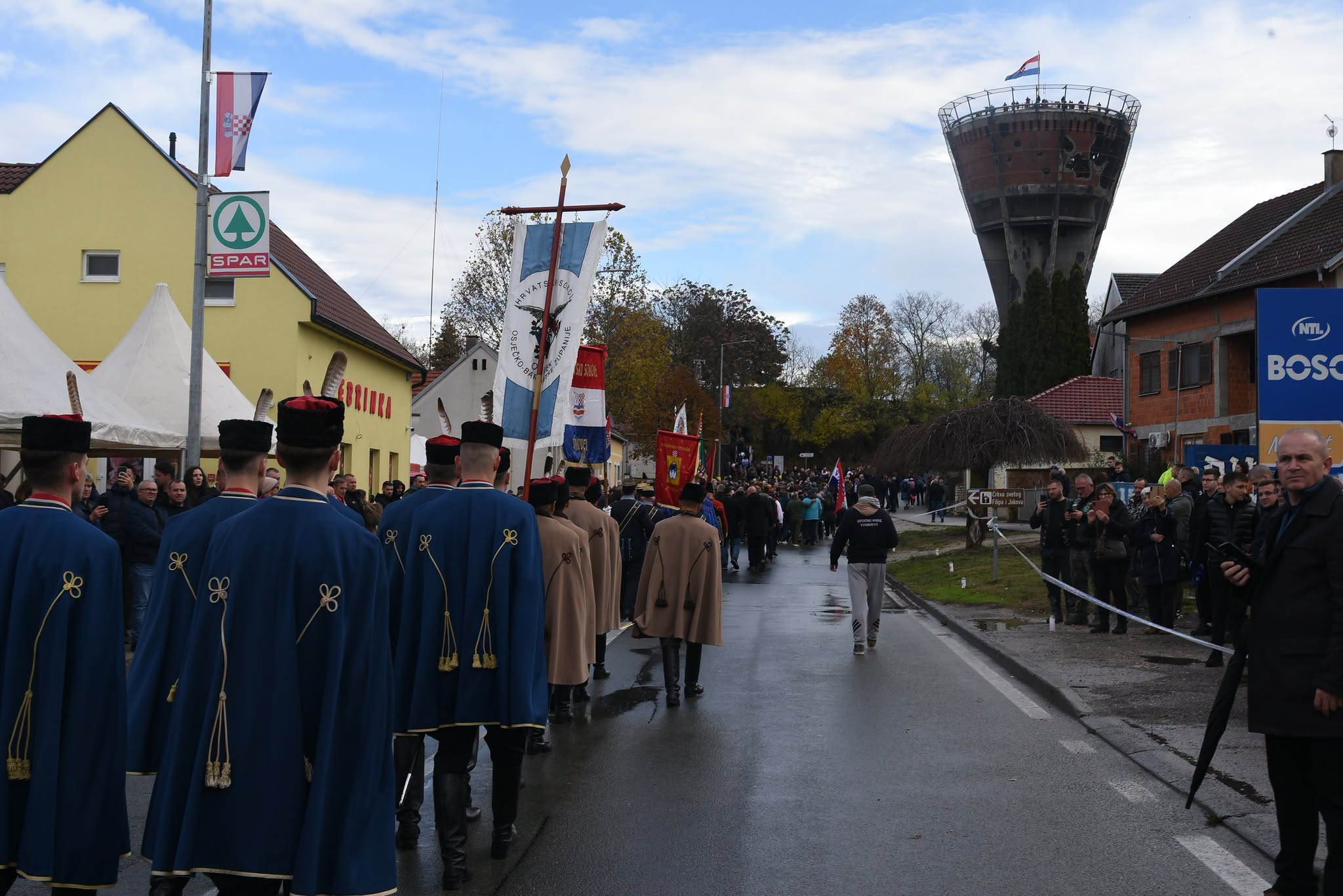
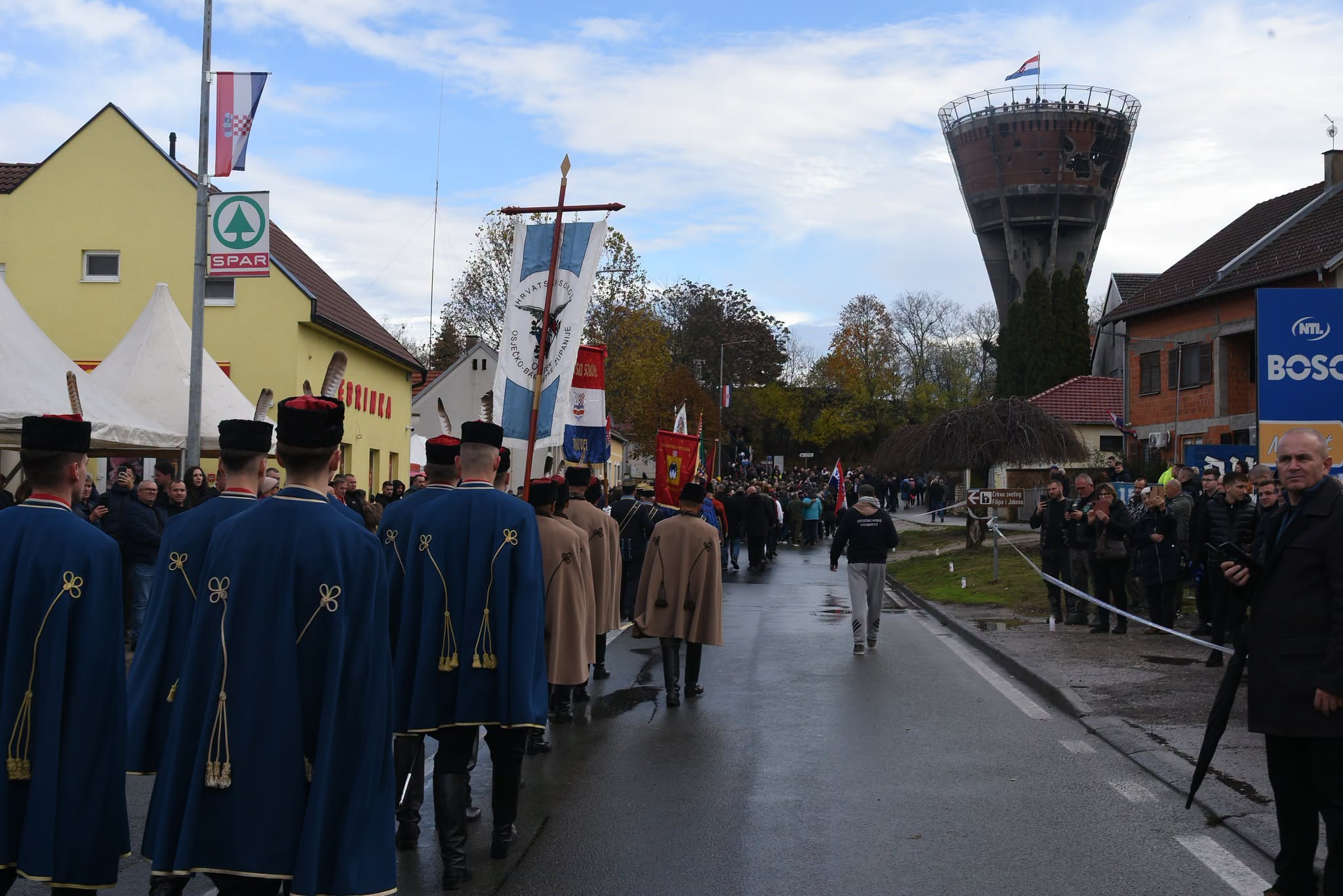
Every year, 18 November marks one of the most solemn and emotionally charged days in Croatia’s national calendar. It is a day of remembrance, mourning and reflection, commemorating the fall of Vukovar and the horrific massacre of civilians in Škabrnja in 1991, during the Serbian and Yugoslav military aggression against Croatia.
Thirty-five years later, the wounds inflicted upon these communities remain deeply embedded in Croatia’s collective memory. The commemorations held on this day, and throughout the surrounding weeks and months, honour not only those who perished in Vukovar and Škabrnja but also the countless victims of atrocities committed during the Croatian War of Independence, from 1991 to 1995.
For Croatia, 18 November is far more than an anniversary of wartime tragedy. It is a reminder of the immense human cost of independence, the extraordinary courage of ordinary citizens who stood against overwhelming military force, and the enduring obligation to uncover the truth about those whose remains have yet to be found.
Vukovar: A City That Became a Symbol of Croatian Resistance
The Battle of Vukovar remains one of the bloodiest and most consequential confrontations of the Croatian War of Independence. For nearly three months, approximately 2,000 Croatian defenders, many of them ordinary civilians before the outbreak of war, resisted an attacking force estimated at some 30,000 members of the Yugoslav People’s Army (JNA) and Serbian paramilitary formations.
Against overwhelming military superiority, Vukovar’s defenders fought with extraordinary determination, holding their positions while the city endured relentless artillery bombardment and widespread destruction.
By the time Vukovar fell on 18 November 1991, much of the city had been reduced to rubble. Homes, schools, churches, public buildings and essential infrastructure lay devastated. The destruction bore witness to the ferocity of the assault and the enormous suffering inflicted upon the civilian population.
Even Vukovar Hospital, where the wounded, sick and vulnerable had sought refuge, was not spared. As shells struck the hospital and its surroundings, patients and medical personnel were forced to shelter in its basement and protective facilities, enduring conditions of extraordinary hardship and fear.
Yet the horrors did not end with the city’s fall.
On 20 November 1991, Serbian forces removed patients, wounded defenders and civilians from Vukovar Hospital and transported many of them to the nearby Ovčara farm.
There, prisoners were subjected to brutal beatings, humiliation and torture. They were subsequently taken in groups to an execution site near Grabovo, where they were murdered and buried in a mass grave, their bodies concealed beneath the earth by heavy machinery.
At least 264 people were killed in the Ovčara massacre, one of the most notorious atrocities committed during the war in Croatia.
The human toll of the siege itself was devastating. At least 2,717 Croatian defenders and civilians were killed, more than 22,000 residents were displaced, and thousands were detained in prison camps.
For the Croatian nation, Vukovar became much more than a devastated city. It became an enduring symbol of resistance, courage, sacrifice and the determination to achieve freedom.
Those three months of desperate defence remain etched into the national consciousness as a sacrifice that helped secure Croatia’s survival. By resisting vastly superior forces, Vukovar’s defenders bought precious time for the rest of the country to organise its military capabilities, acquire weapons and strengthen its defence against further aggression.
The city fell, but the spirit of its resistance endured.
More Than 70,000 Gather to Honour Vukovar’s Victims
The annual Remembrance Procession in Vukovar is among Croatia’s most moving expressions of national remembrance.
Beginning at Vukovar Hospital and proceeding through the city to the Memorial Cemetery of the Victims of the Homeland War, the procession retraces a path deeply associated with the suffering and sacrifice of November 1991.
This year, marking the 35th anniversary of Vukovar’s fall and the massacres that followed, according to the HRT news report, more than 70,000 people participated in the solemn procession this year.

Carrying Croatian national flags, memorial symbols and flowers, participants walked in remembrance of those who lost their lives defending the city and those who were murdered after its occupation.
For many, the procession is profoundly personal. Among the crowds are surviving defenders, former prisoners, families of the murdered and missing, and generations born after the war who have inherited the responsibility of preserving its memory.
Their presence speaks to a truth that has not diminished with the passing decades: the sacrifices made in Vukovar belong not only to the families who suffered directly but also to the history and conscience of the Croatian nation.
Yet remembrance alone cannot bring closure to families who still do not know where their loved ones lie.
The Agonising Search for Croatia’s Missing War Victims
Thirty-five years after the fall of Vukovar, the search for those who disappeared during the war remains one of Croatia’s most painful and unresolved humanitarian challenges.

Approximately 320 Croats remain missing in connection with the wartime events in and around Vukovar, while the national search extends to many other locations across Croatia.
The work of locating their remains has been painstaking, physically demanding and emotionally exhausting. Investigators have spent years examining suspected burial sites, excavating difficult terrain and attempting to reconstruct the circumstances in which victims were killed, and their bodies concealed or subsequently relocated.
Each discovery offers the possibility of ending decades of uncertainty for another grieving family. Each identification restores a name, a personal history and a measure of dignity to someone whose fate had remained hidden for far too long.
But every unsuccessful search also prolongs the anguish of families who have spent more than three decades waiting for answers.
On 16 November 2026, Croatian Deputy Prime Minister and Minister of Croatian Veterans Tomo Medved reaffirmed that resolving the fate of those missing from the war remains a central national priority.
He stated that Serbia’s progress towards European Union membership must be conditional upon addressing unresolved wartime issues, including the missing persons, recognition of the existence of detention and concentration camps, and compensation for former camp inmates.
Speaking to Croatian Radio-Television (HRT), Medved declared:
“Until they find the strength to confront Serbia’s role in the aggression against the Republic of Croatia, with the crimes committed here, the closing of Chapter 23 is simply excluded.”
His statement underscored Croatia’s continuing insistence that Serbia confront its role in the wartime aggression and cooperate fully in establishing the fate of missing victims.
Medved reiterated that Croatia has repeatedly requested access to Serbian archives and information concerning the removal and relocation of victims’ remains following the fall of Vukovar.
Despite years of appeals, he said, concrete answers have not been forthcoming.
According to figures he provided, Croatia continues to search for 1,725 people missing from the war, including 389 Croatian defenders.
Behind every one of those figures is a human life, a family deprived of certainty and a tragedy that cannot be considered resolved until the truth is established.
Petrovačka Dola: Searching Beneath Decades of Waste
Among the most challenging undertakings in Croatia’s continuing search for missing war victims are the extensive excavations at Petrovačka Dola, near Vukovar’s municipal waste disposal site.

Conducted under the auspices of the Ministry of Croatian Veterans, the investigations have uncovered human remains buried beneath enormous quantities of accumulated rubbish, including layers of hazardous asbestos-containing material.
The site has been described as one of the most demanding locations encountered in the search for those who disappeared during the Homeland War.
Systematic investigations began in April 2022, requiring exceptional persistence, technical expertise and coordination among excavation teams, forensic specialists and identification authorities.
The work has produced significant results.
The remains of 38 Croatian defenders and civilians have been recovered from this site and identified, most of them individuals forcibly taken from the Vukovar area during the autumn of 1991.
These discoveries demonstrate the importance of Croatia’s sustained efforts to locate its missing citizens, even when the passage of time and the deliberate concealment of human remains have made the task extraordinarily difficult.
The excavations at Petrovačka Dola also serve as a disturbing reminder that the crimes of 1991 did not end with the killings themselves. The concealment and relocation of victims’ bodies compounded the suffering inflicted upon their families, denying them knowledge of their loved ones’ fate and the opportunity for a dignified burial.
For the families of the missing, every excavation carries both hope and dread: hope that a loved one may finally be found, and dread that another search may end without an answer.
The passage of thirty-five years has not diminished their need for truth.
Škabrnja: A Village Scarred by Massacre
While Vukovar occupies a central place in Croatia’s remembrance of November 1991, the village of Škabrnja, in the hinterland of Zadar, bears its own terrible history of suffering.
On 18 November 1991, the same day Vukovar fell, Yugoslav People’s Army forces and Serbian paramilitary units entered Škabrnja.

What followed was a brutal assault upon the village’s civilian population.
Moving from house to house, members of the attacking forces tortured and killed residents who had remained in their homes.
Thirty-eight people were murdered during the initial attack. By February 1992, at least another 26 people who had been unable to escape had also been killed.
For a small rural community, the scale of the violence was catastrophic. Families were torn apart, homes were destroyed, and the village was subjected to a campaign of terror that left lasting scars upon its people.
The atrocities in Škabrnja were not isolated acts of battlefield violence. They formed part of a wider pattern of attacks against Croatian and other non-Serb civilian populations in territories targeted for Serbian control.
The International Criminal Tribunal for the Former Yugoslavia (ICTY) examined this pattern in proceedings against Milan Martić, a political leader of the self-proclaimed Republic of Serbian Krajina, which occupied substantial parts of Croatian territory during the war.
In its judgment, the Tribunal found that the attacks and accompanying violence were connected to a joint criminal enterprise aimed at forcibly removing non-Serb populations from territories under Serbian control.
The judges concluded that the displacement of civilians was not simply an incidental consequence of military operations but a principal objective of the campaign.
The judgment described a recurring pattern in which villages and populated areas were first shelled, followed by the entry of ground forces. Once the fighting had subsided, civilians who had been unable to flee were exposed to killings and other acts of violence.
Homes, churches and other property were destroyed, while widespread looting and intimidation helped prevent displaced residents from returning.
These judicial findings are particularly significant because they establish that the suffering inflicted upon communities such as Škabrnja cannot be understood merely as the tragic collateral damage of war.
The violence formed part of a broader campaign of forced displacement, persecution and territorial control.
For the surviving families of Škabrnja, as for those of Vukovar, the consequences have endured across generations.

Remembrance Must Be Accompanied by Truth and Justice
Thirty-five years after the massacres of November 1991, Croatia continues to honour the courage of its defenders and mourn the civilians whose lives were violently taken.
Yet the annual commemorations also expose the unfinished work of justice.
Not all of the missing have been found. Many families remain without answers. The search for burial sites continues, and unresolved questions concerning wartime crimes, accountability and access to information remain sources of deep pain.
Croatia’s insistence that Serbia cooperate in locating missing persons and addressing the legacy of wartime detention camps is therefore not simply a matter of bilateral diplomacy. It concerns the fundamental humanitarian obligation to establish the fate of the missing and uphold the dignity of victims and their families.
The dead cannot speak for themselves. Their stories depend upon those who survived, those who remember, and those who continue the difficult work of uncovering the truth.
Vukovar and Škabrnja stand as enduring reminders of what Croatia endured in its struggle for independence. Their histories must not be diminished by the passage of time, political expediency or the temptation to consign painful events to the distant past.
The thousands who walk through Vukovar each November do more than commemorate the fallen. They reaffirm a collective responsibility to remember the sacrifice, preserve the historical record and seek answers for those whose loved ones remain missing.
For the families still waiting beside empty graves, thirty-five years is not the measure of a distant historical event. It is the measure of a lifetime spent wondering, searching and hoping.
Until the last missing person is found, until every family receives the answers it deserves, and until the truth about these crimes is fully acknowledged, the wounds of November 1991 cannot entirely heal.
Lest we forget!
Ina Vukic





Leave a Reply